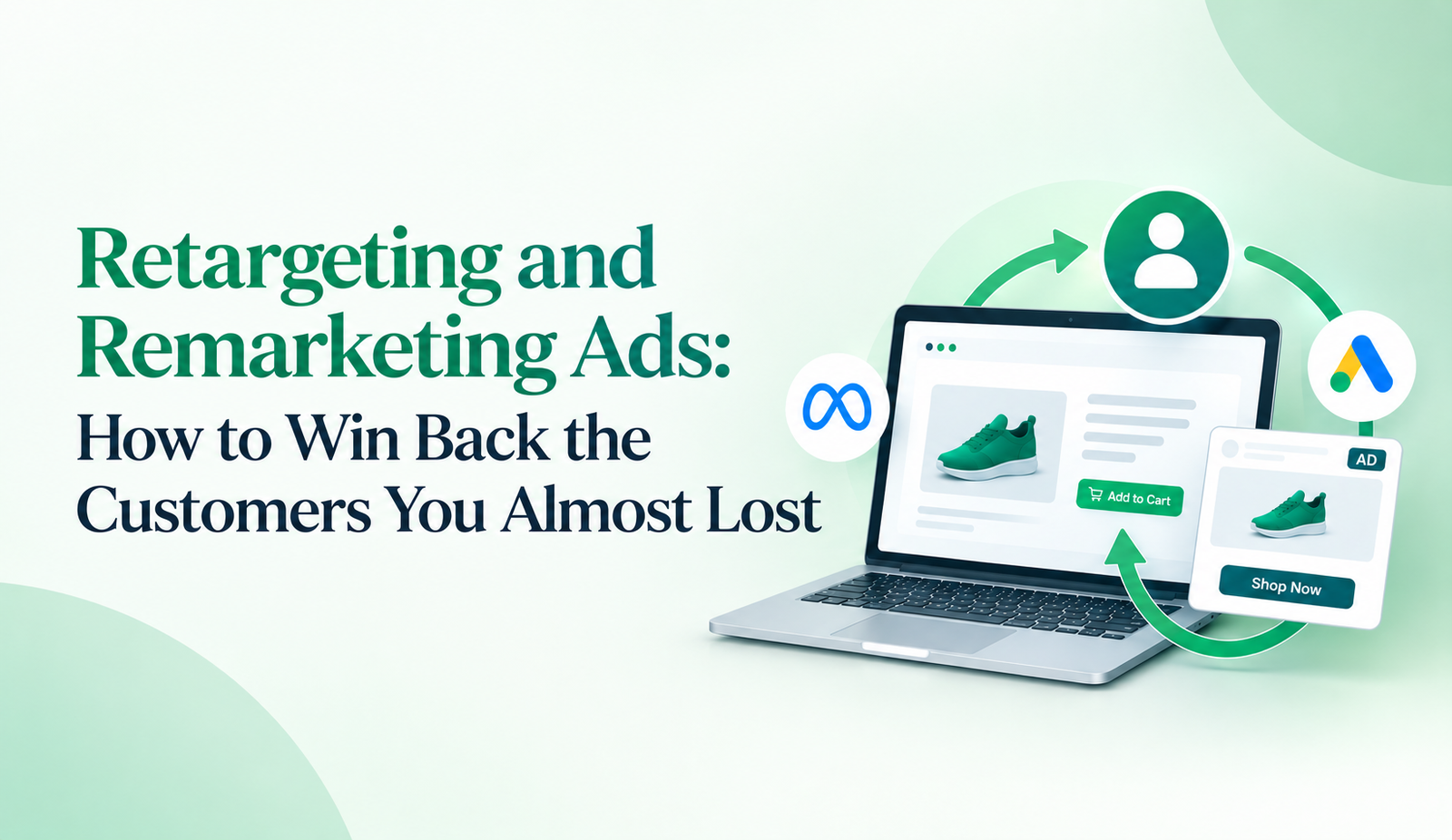
Someone visits your website, browses a few pages, maybe even adds something to their cart, and then leaves without buying anything. This happens far more often than most business owners realize. Industry data consistently shows that the overwhelming majority of first-time website visitors never convert on that first visit. They get distracted, they compare prices elsewhere, or they simply aren’t ready to commit yet.
This is exactly where retargeting and remarketing ads come in. Instead of treating that lost visitor as a dead end, these campaigns give you a second, third, and sometimes fourth chance to bring them back and complete the action they almost took.
What Retargeting and Remarketing Actually Mean
The two terms get used interchangeably, but there’s a small technical difference worth knowing.
Retargeting usually refers to showing ads to people based on their behavior on your website or app, using a tracking pixel or cookie. Remarketing more traditionally referred to re-engaging past customers through email, though today most marketers use the two terms to mean the same thing across Google and Meta platforms.
Either way, the core idea stays the same: you’re marketing to people who already know your brand, rather than starting from zero with a completely cold audience.
Why Retargeting Ads Convert Better Than Cold Campaigns
Cold audience ads are working against unfamiliarity. The person has never heard of you, doesn’t know if you’re trustworthy, and has no context for why your offer matters to them.
Retargeting skips all of that. The audience has already visited your site, read your content, or interacted with your product pages. That prior exposure builds a level of trust and familiarity that cold ads simply can’t replicate in one impression.
This is why retargeting campaigns typically show stronger click-through rates and lower cost-per-conversion compared to cold prospecting campaigns. You’re not trying to convince a stranger. You’re reminding an interested person to finish what they started.
Common Types of Retargeting Campaigns
Website Visitor Retargeting
Ads shown to anyone who visited your site within a set window, usually 30 to 90 days. This works well for brand awareness and keeping your business top of mind.
Cart Abandonment Retargeting
Specifically targets people who added a product to their cart but didn’t check out. Ecommerce businesses see some of the highest returns from this segment because purchase intent was already high.
Dynamic Product Retargeting
Shows the exact products or services a visitor browsed, rather than a generic ad. This personalization tends to perform noticeably better than static creative because it feels relevant rather than promotional.
Customer List Remarketing
Targets people who have already purchased, using their email list uploaded to Google or Meta. This is useful for repeat purchases, upsells, or seasonal offers.
Video and Engagement Retargeting
Targets people who watched a portion of your video ad or engaged with your social content but didn’t visit your website yet. It’s a softer, earlier-stage retargeting layer.
Setting Up Retargeting the Right Way
A retargeting campaign is only as good as the tracking behind it. A few fundamentals matter more than most businesses realize.
Install tracking correctly. The Meta Pixel and Google Ads tag need to be placed on every relevant page, not just the homepage. Missing pixel coverage on product or checkout pages is one of the most common reasons retargeting underperforms.
Segment your audiences. Someone who read a blog post and someone who abandoned a cart are at completely different stages of intent. Showing them the same ad wastes the budget. Build separate audience segments based on the specific page or action.
Set frequency caps. Showing the same ad to the same person fifteen times a day doesn’t increase conversions, it increases annoyance. Most platforms let you cap how often a single user sees your retargeting ad within a given period.
Exclude converted users. Once someone completes a purchase, they shouldn’t keep seeing an ad asking them to buy the same thing. Exclusion lists keep your spend efficient and your brand from looking careless.
Refresh your creativity regularly. Ad fatigue sets in faster with retargeting audiences since they’re a smaller, repeated pool of people. Rotating creative every few weeks keeps engagement from dropping off.
Where Retargeting Fits Into a Broader Marketing Strategy
Retargeting works best as one layer inside a full-funnel strategy, not as a standalone tactic. It depends entirely on having enough top-of-funnel traffic coming in through SEO, content, or cold ads first. Without that inbound flow, there’s no audience left to retarget.
Businesses that pair strong organic visibility with a structured retargeting layer tend to see the most efficient use of ad spend, since the retargeting budget is working on warm traffic that content and SEO efforts already brought in.
According to Google’s own guidance on remarketing, showing ads to people who have already visited a site or used an app can help re-engage users who did not convert on their first visit, which underlines why this stays a standard part of most paid media strategies rather than an optional add-on.
Frequently Asked Questions
How long should a retargeting window be?
Most businesses start with a 30-day window and adjust based on their typical sales cycle. Higher-consideration purchases like real estate or B2B services often benefit from a longer 60 to 90 day window.
Is retargeting only for ecommerce businesses?
No. Service-based businesses use retargeting effectively too, especially for re-engaging people who visited a pricing page or filled part of a contact form without submitting it.
What budget is reasonable for retargeting?
Retargeting typically needs a much smaller budget than cold campaigns since the audience pool is smaller. Many businesses allocate 10 to 20 percent of their total ad spend to retargeting and see it outperform the rest on cost-per-conversion.
Does retargeting feel intrusive to customers?
It can, if frequency isn’t controlled or if the same ad is shown for too long. Well-managed retargeting with frequency caps and creative rotation feels like a helpful reminder rather than a nuisance.
Retargeting isn’t a replacement for a strong top-of-funnel strategy, but it’s one of the most cost-effective ways to make sure the traffic you already worked to earn doesn’t go to waste. For businesses looking to set this up properly, Medowa Global can help structure campaigns that turn missed visits into actual conversions.