Open any analytics dashboard and the first thing staring back at you is a visitor count. Then comes the question everyone asks: is that number good?
It depends. A big figure can sit on top of a weak site, and a modest one can belong to a page that pays the bills. This guide walks through what website traffic really measures, where it comes from, how to check any site’s numbers, and how to get more of the visits that matter.
What Is Website Traffic? And Why It’s So Important
Website traffic is simply the number of visits a site receives. Tools count it in three ways: users (people or devices), sessions (visits), and pageviews (pages loaded). If one person reads three articles in a sitting, that’s one user, one session and three pageviews.
Every goal a website has begins with a visit. Enquiries, sales, bookings, newsletter signups, none of it happens in an empty room. Traffic also works as a smoke alarm. If visits to an important page halve in a week, you check rankings, campaign links and tracking before you check anything else.
One opinion, though. Raw traffic is the most overrated number in marketing. Three hundred people who arrived looking for your exact service are worth more than five thousand who clicked a flashy headline and left. Relevance first, volume second.
What Is Traffic in Digital Marketing?
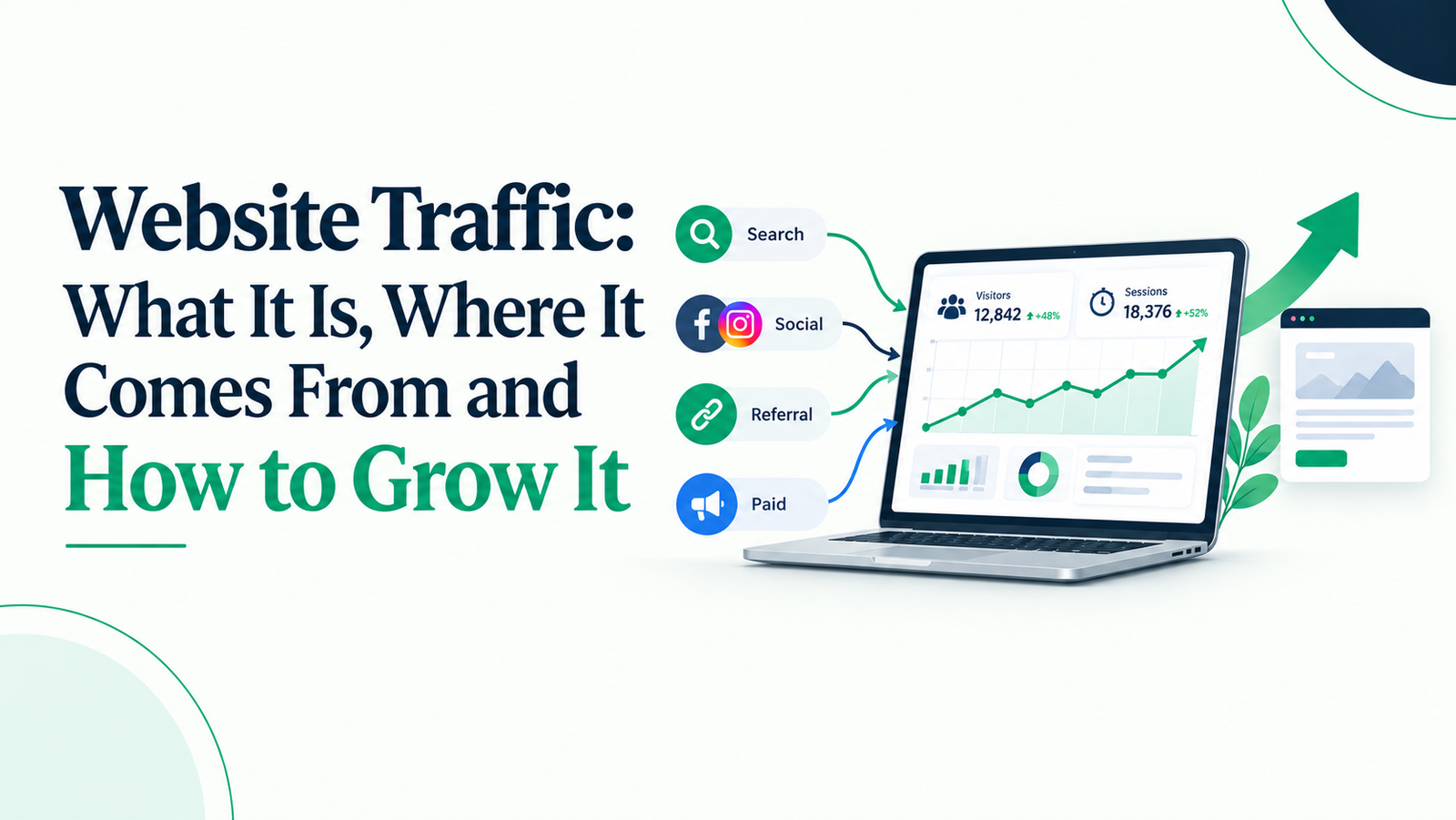
Marketers sort traffic by where it came from, and GA4 handles this through default channel groups. Organic search means unpaid clicks from Google or Bing. Direct covers people typing your address or opening a bookmark. Referral is anyone who followed a link from another site. Then there’s social (Instagram, LinkedIn and the like), paid (ads) and email (newsletters).
They don’t behave alike. Organic visitors usually show up with a question and a bit of patience. Paid visitors are often closer to buying, but they disappear the day the budget does. Email readers already know you, so they convert quickly, though they rarely add new people.
Take a look at your own split. If most visits come through one channel, that isn’t a traffic strategy. It’s a dependency.
Website Traffic in Digital Marketing
Picture a funnel. A wide group finds you, fewer look around, fewer still enquire, and a handful come back for more.
What decides how many make it through is search intent, meaning what the person wanted at the moment they clicked. Take the phrase “website traffic.” One searcher wants a definition. Another wants a free tool to size up a competitor. A third wants ways to bring in more visitors. A page that answers only one of these loses the other two to whoever answers all three.
Strong pages also touch the ideas a reader would meet next anyway: organic traffic, sessions, bounce rate, referral sources, conversion rate. They do it in ordinary sentences, not by repeating a keyword until it reads badly.
Want a ten-minute test? Search your target keyword and open the top five results. Note what each one answers first. If four lead with a definition and yours opens with tactics, you’ve found a mismatch worth fixing.
How Digital Marketing Drives Website Traffic
There’s no single trick. It’s a handful of habits, kept up for months.
Start with real questions. Collect them from search suggestions, “People also ask” boxes, sales calls and support emails, then answer each one better than what’s already ranking. Add something only you have: your own numbers, a before-and-after, a screenshot from a project. That detail is what separates content that ranks from a tidy rewrite of the top five results.
Give every page one job. A guide teaches. A service page helps someone decide. A comparison helps someone choose. Ask a page to do all three and it usually manages none.
The on-page basics are dull, and they still count. Write a distinct title tag and meta description, keep headings in a sensible order, use short URLs, add alt text, and link related pages with descriptive anchors. If you’d like this checked across a whole site, a search engine optimization agency can audit it properly.
Links from relevant sites help too. A mention on an industry blog or a partner page sends referral visitors and shows search engines your content is worth surfacing. Original data earns these far more reliably than cold outreach.
Social and email rarely beat search on volume, but they bring people back and give new pages a first audience. A focused social media marketing plan works best when every post leads to a page that deserves the click.
Paid ads are for when you need speed. You can test headlines and offers in days and reach people who are searching right now. Run them beside your organic work so growth doesn’t stop when spending does. Search ads management is the usual place to begin.
Finally, refresh what already ranks. Update old statistics, add fresh examples, merge thin pages that overlap. Improving a page that already earns impressions is often quicker than starting a new one.
Marketing KPIs: Website Traffic
Visits are just the entry ticket. The numbers next to them tell you whether the traffic is any use.
Users and sessions show direction, and traffic by channel shows where growth is coming from. Engagement rate and average engagement time tell you whether people are actually reading. GA4 uses engagement rate in place of the old bounce rate, which is no bad thing, since someone who finds the answer in ten seconds and leaves hasn’t failed you. Click-through rate in the Search Console Performance report shows how often searchers pick your listing. Landing-page performance reveals which entry pages hold the right crowd, and conversion rate shows whether any of it pays off.
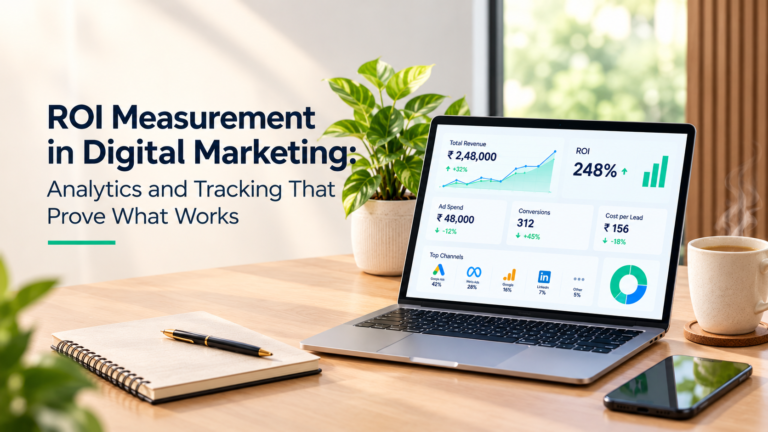
Measure all of this against your own history and goals, not a stranger’s site. A service page with 600 monthly visits and ten enquiries beats a 15,000-visit article that brings none. To connect these figures to revenue, this guide on ROI measurement in digital marketing is a good next read.
A habit worth keeping: once a month, sort your pages by impressions and look for ones with plenty of impressions but a weak CTR. Those pages already rank. A sharper title or description is often the only fix they need.
Website Traffic Checker: Estimate Any Site’s Traffic
Your own site is the easy part, because GA4 and Search Console give real figures. For anyone else’s, you’ll need an estimation tool such as Semrush Traffic Analytics, Similarweb or Ahrefs. They blend ranking data, keyword volumes and browsing panels to estimate monthly visits, top pages, channel split and audience location.
Enter a competitor’s domain and look at the trend over several months, not one snapshot. Check the channel split to see whether they lean on search, social or ads. Then open their top pages and keywords and jot down topics they cover that you don’t. If you can, run the same domain through two tools and trust the overlap more than either number alone.
Keep in mind these are estimates. Tools often disagree, especially on smaller sites. Use them to spot patterns and gaps, not to quote exact totals.
Final Thoughts
Traffic isn’t the goal. Customers are. Know where your visits come from, match each page to what the visitor came for, add details only you can offer, and watch what people do after they land. Keep improving what works, and the numbers tend to follow.