Ask ten business owners what their social media agency does, and you will get ten different answers. Some say “posting”, some say “ads”, and some just say “handling Instagram”. The confusion is understandable, because the two terms get used as if they mean the same thing. They do not.
Getting this right matters because it decides where your budget goes. Pay for the wrong service and you end up with a beautiful feed that brings no enquiries, or a pile of ads sending people to a page that looks abandoned. Let’s sort it out.
What Is Social Media Management?
Picture a busy neighbourhood café. Someone has to open on time, keep the counter clean, greet regulars by name and answer the phone politely. Social media management is that daily upkeep for your online presence. It is less about shouting and more about showing up, consistently and in your own voice.
What it usually covers
- Planning a content calendar and publishing posts, reels and stories on schedule
- Replying to comments and direct messages (community management)
- Keeping the brand voice and visuals consistent across platforms
- Watching mentions, reviews and organic reach
- Reporting on engagement rate and follower growth
Who it suits
It fits businesses that already have customers and want a reliable, professional presence. If people check your profile before they call or visit, management makes that first impression a good one. Our social media management service is built around this ongoing, hands-on rhythm.
What Is Social Media Marketing?
Now imagine that same café wants a full house on a quiet Tuesday. It would put up a banner, offer a limited deal and tell people nearby about it. Social media marketing works the same way: a defined push, aimed at a defined audience, with a result you can count at the end.
What it usually covers
- Paid social campaigns on Meta, LinkedIn, YouTube and other platforms
- Audience targeting and testing different creatives
- Funnel building, from awareness to enquiry to purchase
- Landing page alignment so ad clicks actually convert
- Tracking cost per lead, conversions and return on ad spend
Who it suits
It fits businesses with something specific to push: a launch, an offer, a new location, or a need for more qualified leads. To see how an agency approaches this, take a look at our social media marketing services.
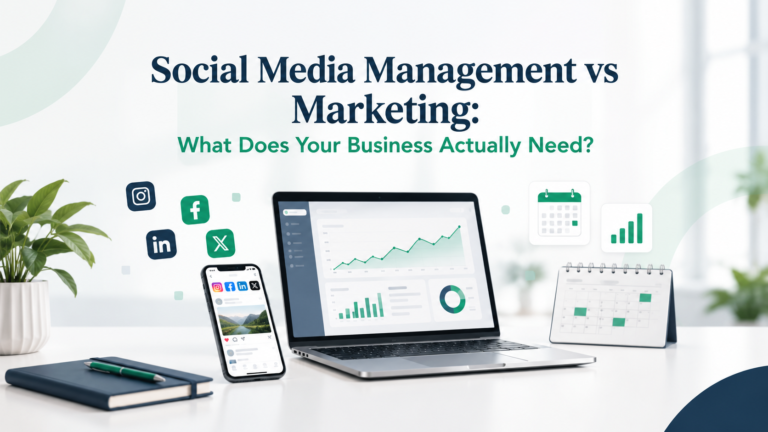
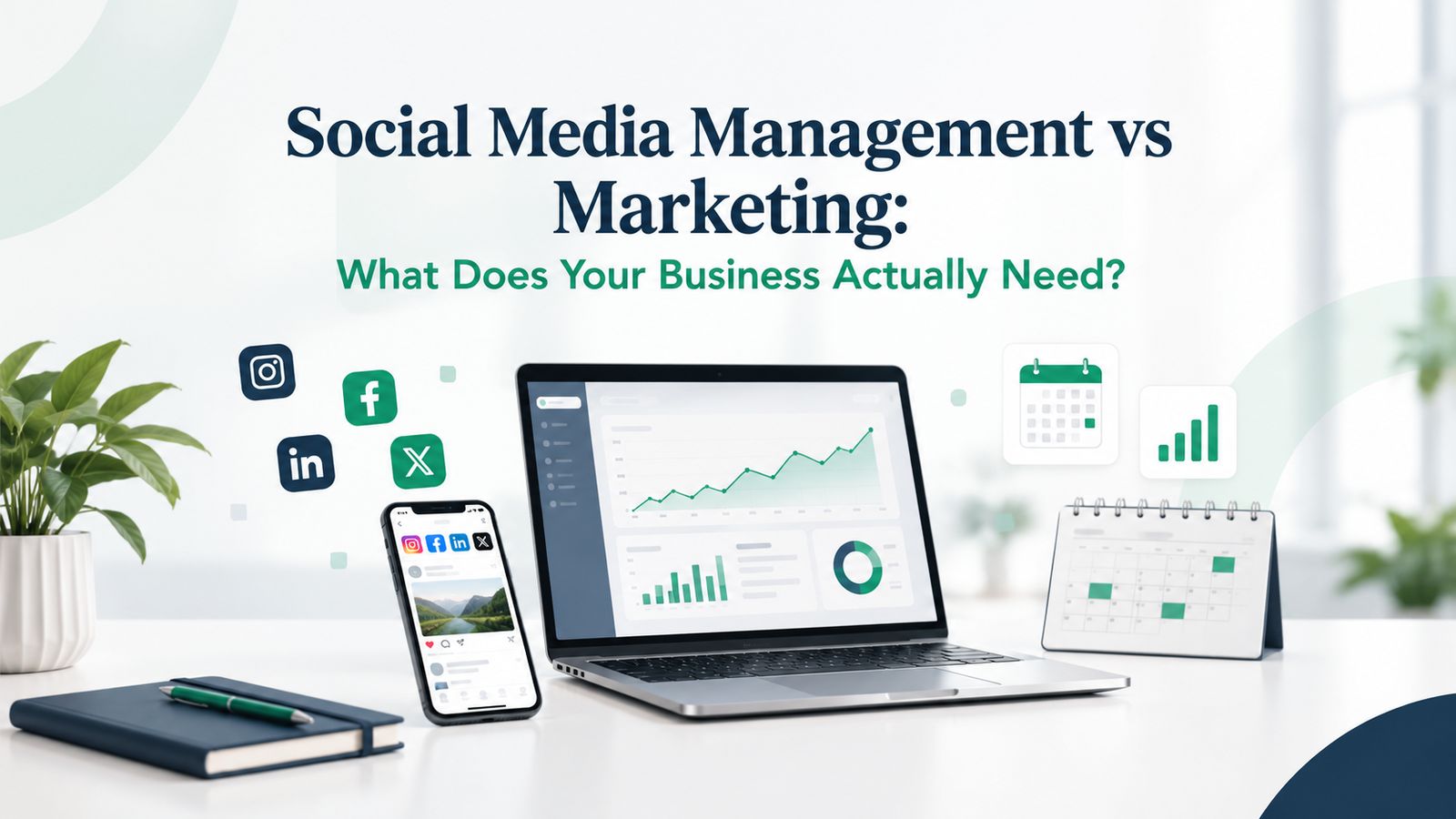
Social Media Management vs Marketing: The Key Differences
Here is the difference through one question each service answers:
- Management asks: “Is our page active, consistent and responsive to the people who already find us?”
- Marketing asks: “Can we put our offer in front of new people and get a measurable response?”
Management is judged over months by trust and engagement. Marketing is judged over weeks by enquiries, sign-ups and cost per result. One protects your reputation, the other expands your reach.
Why Indian Businesses Can’t Afford to Ignore Either
The audience is already there. Kepios analysis for DataReportal puts India at roughly 500 million active social media user identities in 2026, and you can see the full breakdown in the Digital 2026: India report. With that many people scrolling, a neglected profile looks careless, and an unfocused ad budget gets lost in the noise.
For online stores in particular, social is often where discovery happens. We cover the wider picture in our guide to ecommerce marketing in 2026.
Which One Does Your Business Need?
Start with management if…
- Your profiles are inactive or inconsistent
- Customers message you and wait days for a reply
- You have no clear brand look or voice yet
Start with marketing if…
- Your profiles are in good shape but enquiries are slow
- You are launching something and need quick visibility
- You have a landing page or offer ready to convert traffic
You probably need both if…
Most growing businesses land here. Marketing drives strangers to your page, and management makes sure what they find is worth trusting. Running ads onto a silent profile wastes money, and a polished profile with no promotion stays invisible.
How to Brief a Social Media Agency Before You Sign
Whichever service you choose, the quality of your brief shapes the result. A few honest answers up front save weeks of back-and-forth later.
Know your one main goal
Pick the single outcome that matters most this quarter: more enquiries, more footfall, more online orders or a stronger brand image. If everything is a priority, nothing gets measured properly.
Share what you already have
Bring your best-performing posts, customer questions you hear often, brand colours, past campaigns and any offers you plan to run. This helps the team sound like you instead of sounding generic.
Ask how they report
A good agency explains which numbers they will track and why. For management, expect engagement and response time. For marketing, expect cost per lead and conversions. If a report is only a list of likes, ask for more.
Agree on who approves what
Decide early who signs off on posts, who handles sensitive customer messages and how quickly feedback is shared. Delays here slow everything down more than any algorithm change.
Start small, then scale
Begin with a clear three-month plan, review the numbers together and adjust. It is a healthier way to build a long-term partnership than committing blindly to a big budget on day one.
Five Mix-Ups That Quietly Cost Businesses Money
- Treating a posting package as a lead engine. Regular posts keep a page alive, but they rarely bring a flood of new customers on their own.
- Chasing likes over enquiries. A post can go well and still send nobody to your phone or inbox.
- Letting messages pile up. A slow reply can lose a customer faster than a weak ad ever will.
- Boosting without a plan. Pressing “Boost” with no clear audience or goal is closer to guessing than marketing.
- Sending clicks to a weak landing page. Even a sharp ad fails when the page it opens feels confusing or outdated.
How to Measure Whether It Is Working
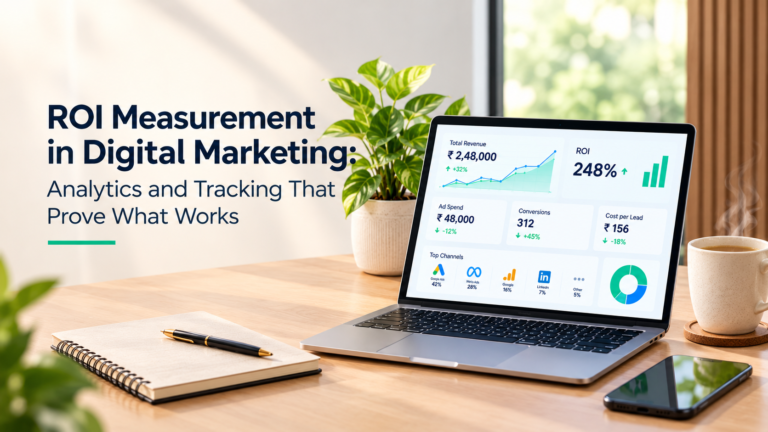
Choose metrics that match the job. For management, watch engagement rate, response time and steady audience growth. For marketing, track cost per lead, conversion rate and return on spend. Then connect those numbers to revenue, so you know what is paying for itself. Our guide on ROI measurement in digital marketing walks through how to do that properly.
The Tools Behind the Work
You do not need an expensive stack to start. Meta’s free Business Suite is a good example, since it brings Facebook, Instagram and WhatsApp for Business management into one place, with scheduling, a shared inbox and insights. Buffer explains it step by step in its guide to Meta Business Suite. Tools help with the workload, but strategy and good judgement still come from people.
Final Thoughts
Management and marketing are not rivals. They are two halves of one social media strategy. Management earns trust, and marketing widens the circle of people who get to see it. Decide where you are weakest today, fix that first, and add the other as your goals grow.