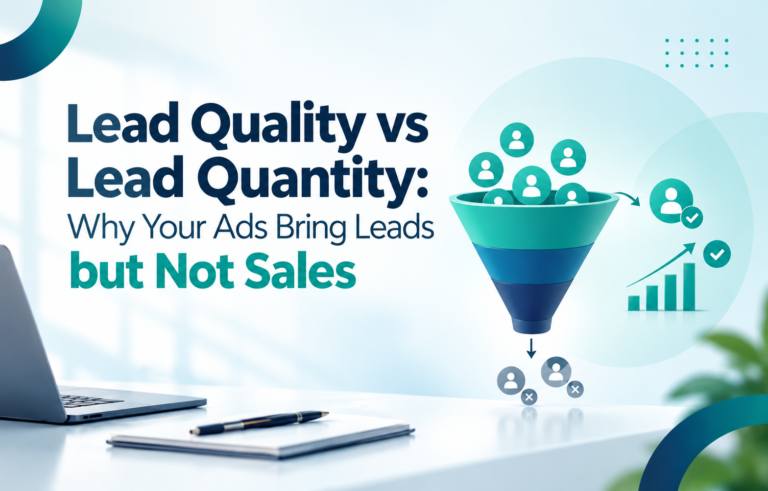
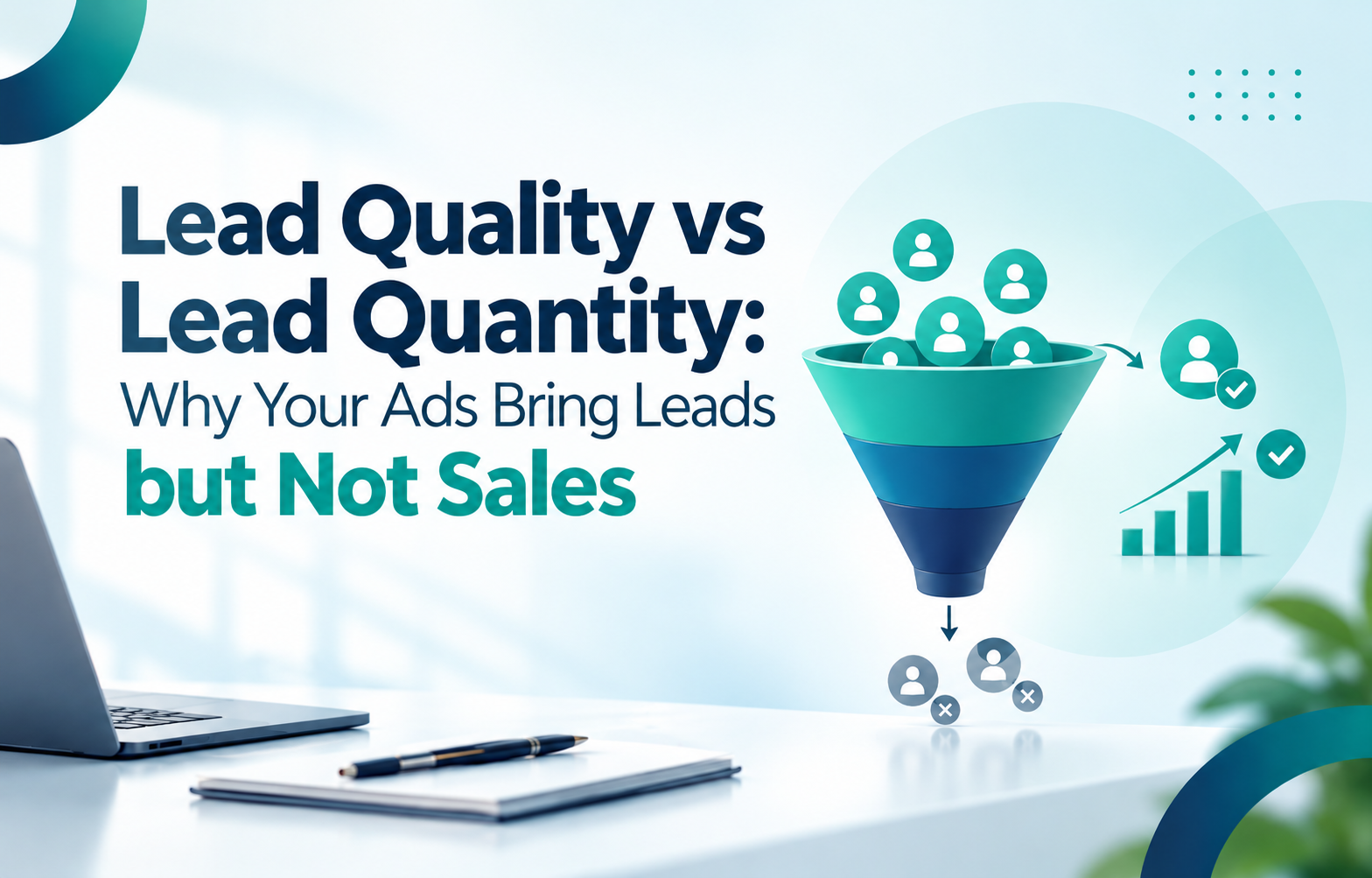
Your campaign is live, the dashboard shows 150 leads this month, and the cost per lead looks great. The phone keeps ringing. But site visits are thin and bookings are thinner. This is the lead quality vs lead quantity problem, and we see it often with real estate and construction clients.
When leads don’t turn into sales, the ads usually get blamed first. More often, though, the trouble starts after the form is submitted.
Why More Leads Don’t Always Mean More Sales
The cost per lead trap
Cost per lead is easy to report, so everyone watches it. But a cheap lead who never picks up the phone is the most expensive one you can buy.
Picture a builder in Kochi running Meta lead ads for a new apartment project. The form is short, the offer is good, and 200 enquiries come in during the month. Then the sales team starts calling. Some people were just curious, some wanted rentals, and some were nowhere near the price range. On the report the campaign looked like a win. In the sales register it wasn’t.
Ad platforms chase whatever goal you give them. Ask for form fills and they’ll find people who fill forms. If you’re still deciding where your budget should go, our guide to Google Ads, Meta Ads and AI ad platforms in 2026 explains how intent differs on each one.
What a quality lead actually looks like
A good lead usually fits your business on four counts: they can afford what you sell, they live in or near your service area, they plan to decide in weeks rather than “someday”, and they asked something specific instead of just leaving a number.
Add one or two qualifying questions to your form, like budget range or when they plan to buy. You’ll probably get fewer leads. You’ll also waste fewer calls, and your sales numbers rarely drop.
The Leak Most Businesses Miss: Follow-Up Speed
Interest fades fast. Someone who enquired about a villa at 11 am may have messaged two other builders by lunch.
A well-known Harvard Business Review study found that companies who contacted a lead within an hour were nearly seven times more likely to qualify that lead than those who waited even a little longer. The exact numbers change by industry, but we’ve seen the same pattern with local service businesses.
The fix is mostly about habits. Send an instant WhatsApp or SMS the moment a form comes in. Give every lead a named owner, so nobody assumes a colleague is already called. Aim for a first call within 15 minutes during working hours, and don’t ignore evenings and weekends, because that’s when many property enquiries arrive.
Fast follow-up can’t fix a bad lead, but slow follow-up can ruin a good one.
CRM Basics That Turn Enquiries Into a Pipeline
A spreadsheet is fine for the first month. After that, leads slip through, follow-ups get forgotten, and nobody can say which campaign actually produced a booking.
You don’t need an expensive CRM. You need one that handles a few things well. It should record where each lead came from (Google, Meta, a portal, a walk-in), move them through clear stages from new to site visit done to closed, note why deals were lost, and remind the team before a warm lead goes cold.
Once stages are tracked, you can finally see where people drop off. You also get a list of everyone who stalled, and you can bring them back with retargeting and remarketing ads.
Call Tracking: See Which Ads Make the Phone Ring
For real estate, interiors and construction, a big share of enquiries come as phone calls, not form fills. If you only track forms, you’re missing half the story.
Call tracking gives different campaigns or pages their own phone numbers. You can then see which ads and keywords bring calls, how long each call lasted, and how many went unanswered. With recordings, you can even hear what prospects really asked. Just tell callers the call may be recorded, and check the rules that apply to you.
Used well, this shows which campaigns bring serious buyers and which bring wrong numbers. It works best next to good website data, so get your analytics right first. Our Google Analytics guide covers the basics.
Offline Conversion Tracking: Teach the Platforms What a Real Customer Is
This is the step that changes how your ads perform over time.
In most of these businesses the sale happens offline, during a site visit or in an office. Google and Meta never see that unless you tell them, so they keep optimising for cheap form fills.
Offline conversion tracking sends real results back to the platform. Google Ads does this through offline conversion imports, and Meta has its Conversions API. When your CRM marks a lead as “site visit done” or “booked”, that signal goes back to the ad account.
Over time the platform learns what your best leads look like and goes looking for more of them. You get fewer junk enquiries and a cost per sale you can actually measure. If you want a wider view of what to track and why, read our piece on ROI measurement in digital marketing.
A Quick Lead Quality Checklist for Builders and Real Estate Teams
Before you raise your ad budget, ask yourself:
- Does our form have at least one qualifying question?
- Does every lead get a response within 15 minutes?
- Is every lead logged in a CRM with its source?
- Are phone calls from ads being tracked?
- Are site visits and bookings being sent back to our ad accounts?
If you said “no” to two or more, more leads will only mean more waste.
Frequently Asked Questions
Is lead quantity ever more important than lead quality?
Sometimes, in the first few weeks of a new campaign, when the platform needs data to learn from. Even then, start measuring quality early instead of waiting months.
How many leads should turn into sales?
It depends on your industry and price point. Rather than chasing someone else’s benchmark, track your own conversion rate at each stage and fix the weakest one first.
Do small businesses really need a CRM?
If you get more than a handful of enquiries a week, yes. Even a basic CRM stops follow-ups from getting lost and shows which sources actually work.
Will adding form questions reduce my leads?
Usually, yes, and that’s okay. The people who still fill it in are more serious, which saves your sales team’s time.
How long does offline conversion tracking take to show results?
Platforms need enough conversion data to learn, so expect a few weeks to a couple of months. The improvement builds slowly rather than overnight.
Where to Start This Week
You don’t have to rebuild everything. Pick the weakest link, whether that’s slow follow-up, missing call tracking or no CRM, and fix that first. Getting the lead is only half the job. What your team does with it decides whether the ad spend pays off. If you’d like a second pair of eyes on the journey from ad click to closed sale, a digital marketing agency in India like Medowa Global can help you find where the leaks are.