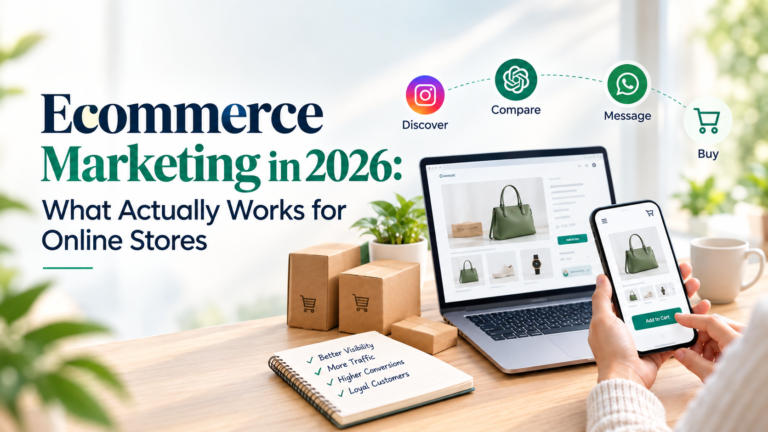
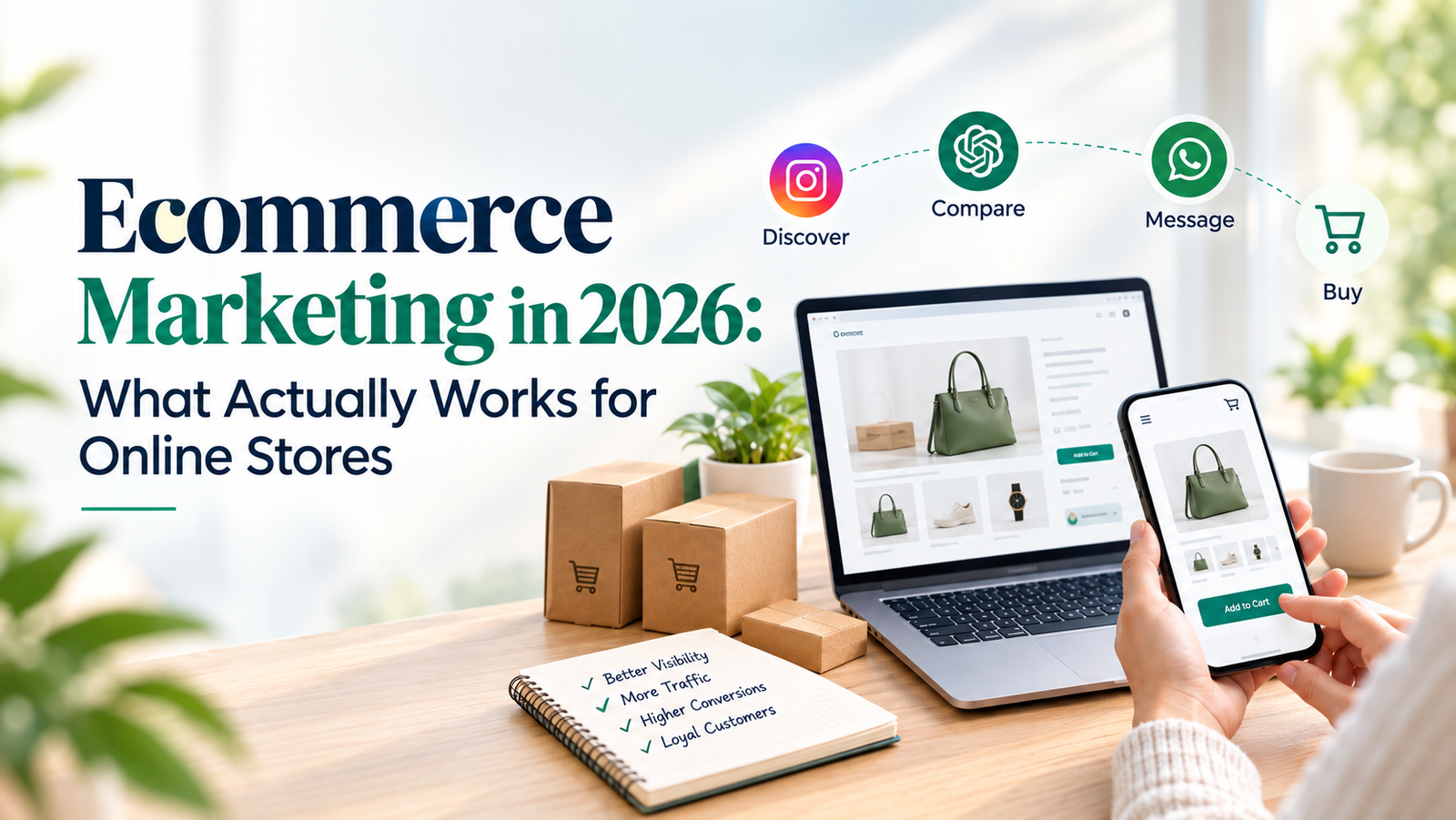
Picture a shopper scrolling Instagram on a Sunday evening. A Reel catches her eye, so she asks an AI assistant how the product compares with two others. A day later she messages the seller to check delivery time, and only then does she pay. Three channels, one purchase.That's the reality behind ecommerce marketing in 2026. No single channel does all the work anymore. This guide covers what's changing, what to fix first, and how to plan the next 90 days without chasing every trend.
How Ecommerce Marketing Is Changing in 2026
Search Engine Land's 2026 ecommerce trends guide names AI agents, unified online and offline shopping, TikTok Shop growth and livestream selling as the big shifts this year. It also reports that over 30% of shoppers say AI speeds up their shopping. In practice, you're now marketing to algorithms as well as people.Brand building hasn't lost its value, though. At Shoptalk 2026, an executive pointed to a March 2026 EMARKETER and Publicis Commerce survey, as covered in eMarketer's Shoptalk takeaways. Most AI assistant shoppers, it found, still research on their own after getting a recommendation. So trust, reviews and a name people recognise keep deciding who gets the order.
Start With a Strong Foundation
Clean Product Data and Structured Markup
AI tools and search engines can only recommend what they can read. Give every product a clear title, an honest description, an accurate price and stock status, and consistent details like size, material and colour. Then add product schema so machines can interpret the page. Google's product structured data documentation lists the properties worth including.Watch for mismatches. A price on the page that differs from the price in your feed is a small error with a real cost, because it chips away at both visibility and trust.
First-Party Data Over Borrowed Audiences
Third-party tracking keeps shrinking. Email addresses, WhatsApp opt-ins, purchase history and quiz answers, on the other hand, belong to you. Ask for them in exchange for something useful, such as a size guide, a restock alert or a first-order offer, and be upfront about how you'll use them.
Be Visible Where Shoppers Actually Look
Search and AI Answers
Classic SEO still counts, but product pages alone won't carry you. Add buying guides, comparison pages and straight answers to the questions customers ask before they purchase. Pages like these serve Google results and AI-generated answers alike, and they show first-hand product knowledge, which supports E-E-A-T.
Social Discovery and Short Video
Short video is now a discovery channel in its own right. Show the product in use, answer one question per clip, and link straight to the item. Creator partnerships help too, since they fill some of the trust gap that AI recommendations leave behind.
Messaging Channels
Plenty of shoppers like to ask one quick question before paying, especially on higher-priced items. A chat gives you the chance to answer it, share a catalogue and close the sale. Our guide to WhatsApp Commerce for small businesses walks through the setup without turning your customers' inbox into a spam folder.
Turn Traffic Into Orders
Paid Ads With a Realistic Budget
Give each platform a clear job. Google usually captures people who already know what they want. Meta introduces products to people who didn't know they needed them. Splitting budget by goal, not habit, stops you paying twice for the same customer. Our Google Ads vs Meta Ads budget framework shows one way to make that split.
Retargeting and Cart Recovery
Most visitors leave without buying. That's normal, so plan a gentle second touch. Cap how often people see your ads, exclude recent buyers, and rotate creative so one banner doesn't follow someone around for weeks. Product Pages and CheckoutAd spend is wasted on a page that underperforms. Test mobile load speed, show delivery dates and return terms near the top, add real customer photos, and offer payment methods your buyers already use, including UPI for Indian stores. And cut any checkout step that doesn't help the customer finish.
Keep Customers Coming Back
A repeat order usually costs less than a new customer. After a purchase, send something helpful first: usage tips, care instructions, a polite review request. Offers can come later. Segment your email and WhatsApp lists by what people bought, so someone who ordered a kettle isn't pitched three more kettles.Reviews need attention too. They sway shoppers, and they give search engines and AI tools evidence that real people trust you. Reply to every one, including the critical ones, calmly and specifically.
Measure What Matters
Return on ad spend is useful but easy to misread, since it ignores margin, returns and discounts. These numbers tell a fuller story:Customer acquisition cost against first-order profitRepeat purchase rate over 90 daysConversion rate by device and traffic sourceShare of revenue from email, WhatsApp and organic channelsSet up purchase and add-to-cart events properly in Google Analytics 4, then review them monthly. With clean data, cutting a weak campaign becomes a decision rather than a guess.
A Simple 90-Day Starting Plan
Days 1 to 30: Audit product data, fix schema errors, check mobile speed and set up conversion tracking. Days 31 to 60: Publish two buying guides, start one short-video series and begin collecting email or WhatsApp opt-ins .Days 61 to 90: Test one paid campaign per platform, add cart recovery and review profit-based metrics. Resist the urge to do everything at once. A short plan finished properly beats a long one left half done.
Frequently Asked Questions
What is ecommerce marketing? It covers everything that brings shoppers to an online store and helps them buy, including SEO, paid ads, social media, email, messaging and content. What are the biggest ecommerce marketing trends in 2026? AI-assisted shopping, creator-led social discovery, livestream selling, messaging-based sales and first-party data collection lead the list. How much should a small online store spend on marketing? There's no fixed figure. Start with an amount you can afford to test with, then raise the budget only where acquisition cost stays below first-order profit. Is SEO still worth it for ecommerce stores? Yes. Clear product pages, helpful guides and structured data support Google rankings, and they make your products easier for AI tools to understand. How do I get my products recommended by AI shopping tools? Keep product data accurate and consistent, add structured markup, collect genuine reviews and publish content that shows real product knowledge.
Ecommerce marketing in 2026 rewards stores that stay clear, consistent and customer-first. If you'd like a team to help map that out, the digital marketing specialists at Medowa Global work with online businesses on exactly this.