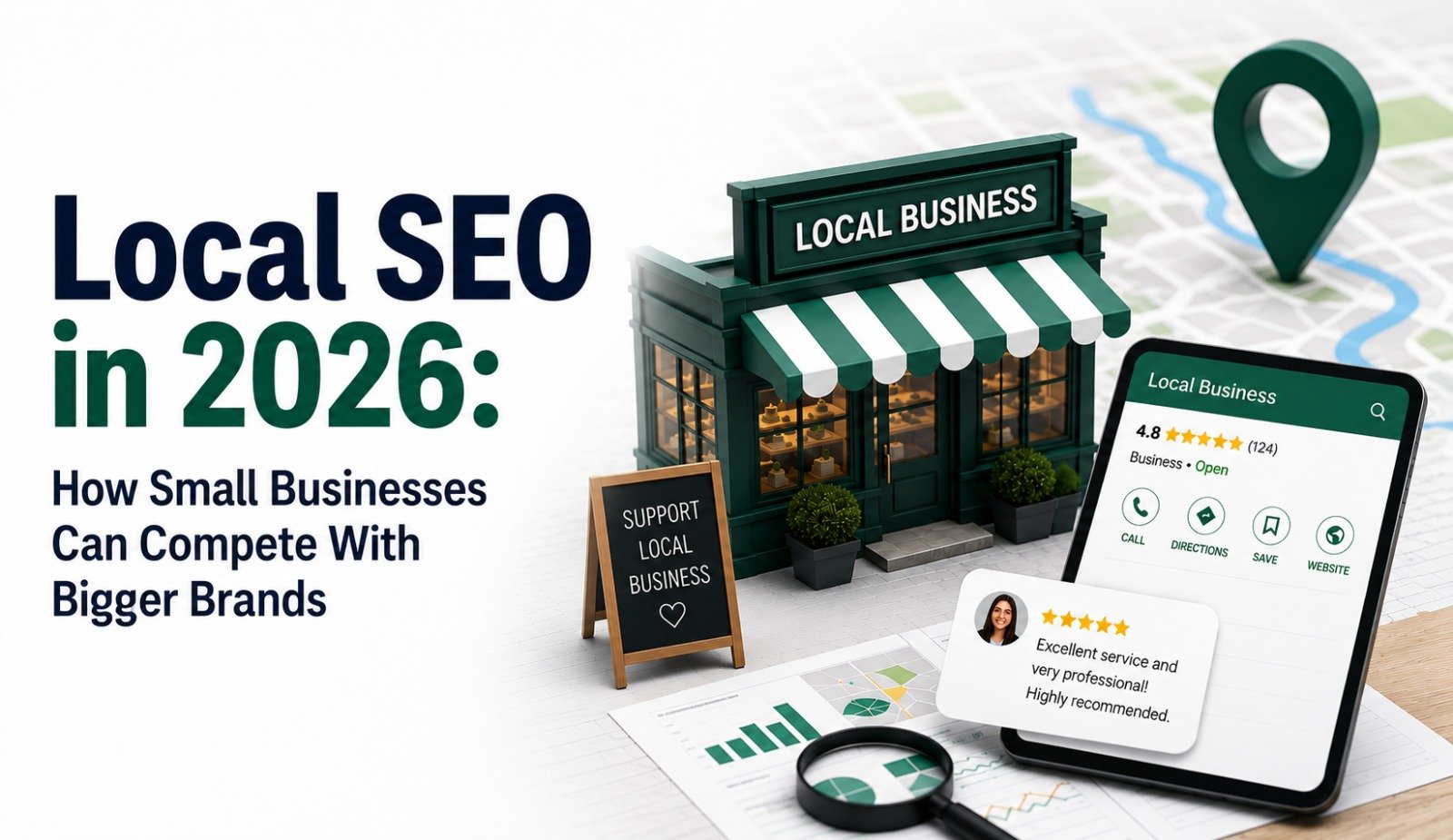
Big brands have bigger budgets, larger teams, and years of domain authority behind them. On paper, that sounds like an unfair fight for a small, local business trying to get found online. But local search doesn’t actually work the way global search does and that difference is exactly where small businesses have a real shot at outranking companies many times their size.
Local SEO rewards relevance and proximity as much as it rewards authority. A well-optimized local business can regularly outrank a national chain for the searches that matter most: the ones happening right in its own neighborhood. Here’s what that actually looks like in 2026.
Why Local Search Plays by Different Rules
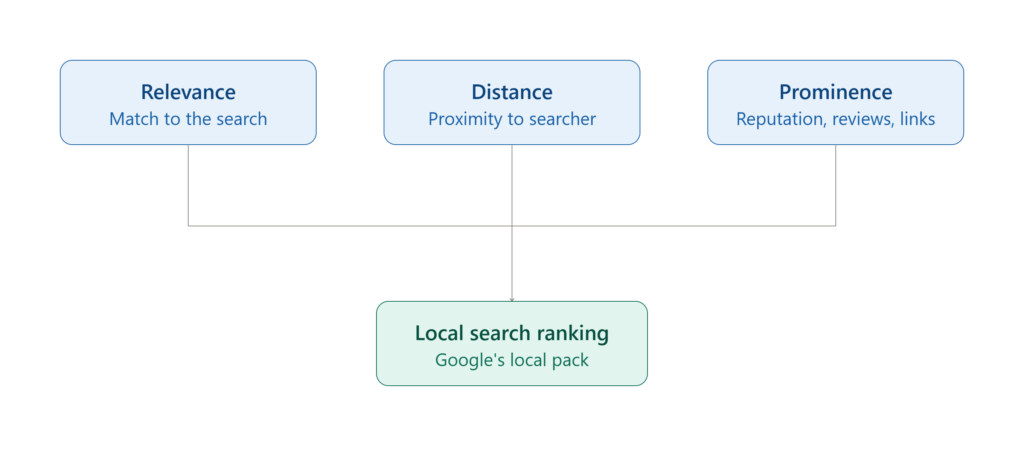
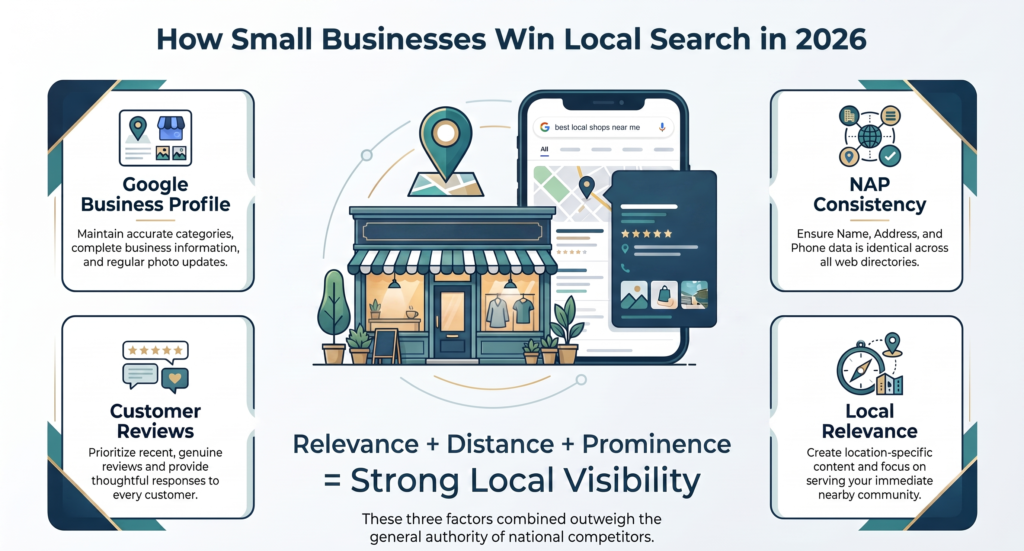
When someone searches for “plumber near me” or “bakery in [city],” Google isn’t just ranking based on overall website authority. It’s weighing signals like physical proximity, business category accuracy, review quality, and how consistently a business appears across the web with the same name, address, and phone number.
This is why a well-optimized local business with fewer backlinks can still beat a national brand for a “near me” search; the bigger brand simply isn’t built for hyperlocal relevance the way a local business naturally is. Google’s own guidance on local ranking factors confirms that relevance, distance, and prominence, not overall site authority are the three pillars local rankings are built on.
Google Business Profile Is Still the Foundation
If there’s one thing that separates small businesses winning local search from those stuck on page two, it’s how seriously they treat their Google Business Profile (GBP). This isn’t a “set it up once” listing. It functions more like a live storefront one that needs regular upkeep to keep pulling its weight.
A few things matter more than most business owners realize:
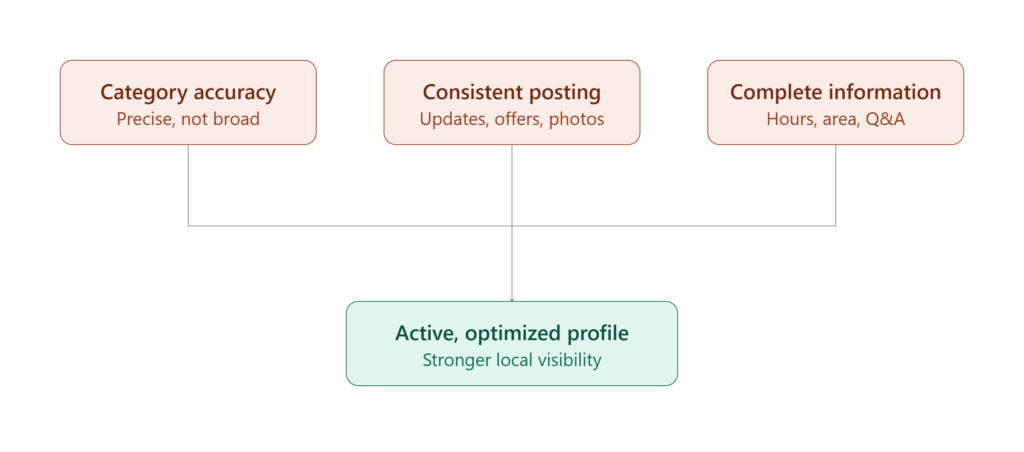
- Category accuracy. Choosing the primary category that most precisely matches the business not the broadest one has a direct impact on which searches a listing surfaces for.
- Consistent posting. Businesses that post updates, offers, or photos regularly tend to show stronger engagement signals than those with a static, outdated profile.
- Complete information. Hours, service areas, attributes, and Q&A sections left empty are missed opportunities and sometimes missed matches for local search intent.
A GBP that’s actively maintained tells both customers and search engines that the business is active, relevant, and trustworthy.
Reviews Have Become a Ranking Factor, Not Just a Trust Signal
Reviews used to be viewed mainly as social proof for customers deciding between options. That’s still true, but reviews now also feed directly into how local search engines assess a business’s relevance and reliability.
Volume matters, but so does recency and response rate. A business with steady, recent reviews and thoughtful replies to both positive and negative feedback signals ongoing activity and customer engagement far better than a business with a large but stagnant review count from years ago.
Encouraging reviews shouldn’t feel like an afterthought. Building it into the natural end of a customer interaction, whether that’s a follow-up message or an in-person request, tends to produce steadier results than occasional bulk campaigns.
NAP Consistency: The Unglamorous Ranking Factor
NAP name, address, phone number sounds like a small detail. But inconsistencies across directories, citation sites, and social profiles genuinely undermine local rankings. A business listed as “Street” in one directory and “St.” in another creates ambiguity. So does an outdated phone number on even a single platform. Small inconsistencies like these force search engines to work around uncertainty instead of confirming trust.
Small businesses that audit and align their NAP data across major directories, citation sites, and their own website consistently see cleaner, more reliable local visibility than those who never revisit it after initial setup.
Hyperlocal Content Beats Generic Content
Bigger brands often produce broad, national-level content because it needs to serve every location they operate in. That’s a structural disadvantage they can’t easily escape and it’s an opening for small businesses.
Content built around specific neighborhoods, local events, regional concerns, or city-specific guides tends to resonate more with both searchers and local search algorithms than generic, one-size-fits-all pages. A local bakery writing about a neighborhood food festival will typically connect with local search intent in a way a national chain’s generic “About Our Pastries” page simply can’t.
This is also where AI-driven search adds a new layer. As more local queries get answered directly within AI Overviews and conversational search results, content that clearly signals location-specific expertise has a better chance of being pulled into those answersv
Local Link Building Without the Overwhelm
Small businesses don’t need thousands of backlinks to compete locally they need the right ones. Local news mentions, community sponsorships, chamber of commerce listings, and partnerships with nearby complementary businesses tend to carry disproportionate local relevance compared to generic, high-volume link building.
A single link from a well-known local publication or community organization often does more for local rankings than a dozen unrelated, low-relevance links ever could.
Bringing It Together
None of these levers work in isolation. A strong Google Business Profile supported by consistent reviews, accurate citations, hyperlocal content, and a handful of genuinely local links compounds into a local search presence that’s difficult for a bigger, less-focused competitor to match.
Small businesses don’t need to outspend larger brands to win locally; they need to out-focus them. And in local search, focus consistently beats budget.
Frequently Asked Questions
How long does it take to see results from local SEO? Most small businesses start noticing meaningful movement within 3-6 months of consistent optimization, though Google Business Profile improvements can show visibility changes sooner than broader website or link-building efforts.
Is Google Business Profile more important than the website for local SEO? Both matter, but for many local, service-area searches, GBP is often the first and sometimes only touchpoint a customer sees. A strong website still matters for conversions and broader search visibility, but neglecting GBP leaves easy wins on the table.
Can a small business really outrank a national brand locally? Yes, particularly for “near me” and location-specific searches, where proximity, local relevance, and consistent local signals often outweigh a national brand’s overall domain authority.
How often should local citations and NAP data be checked? A review every few months is a reasonable baseline, along with immediate updates whenever a business changes its address, phone number, or hours.
Final Thought
Local SEO isn’t a one-time project; it’s closer to an ongoing habit, built through small, consistent actions rather than one big push. The businesses that treat it that way tend to be the ones still showing up at the top of local search results long after their competitors have moved on to the next tactic.
Small businesses looking to strengthen their local search presence can find tailored strategies at Medowa Global.