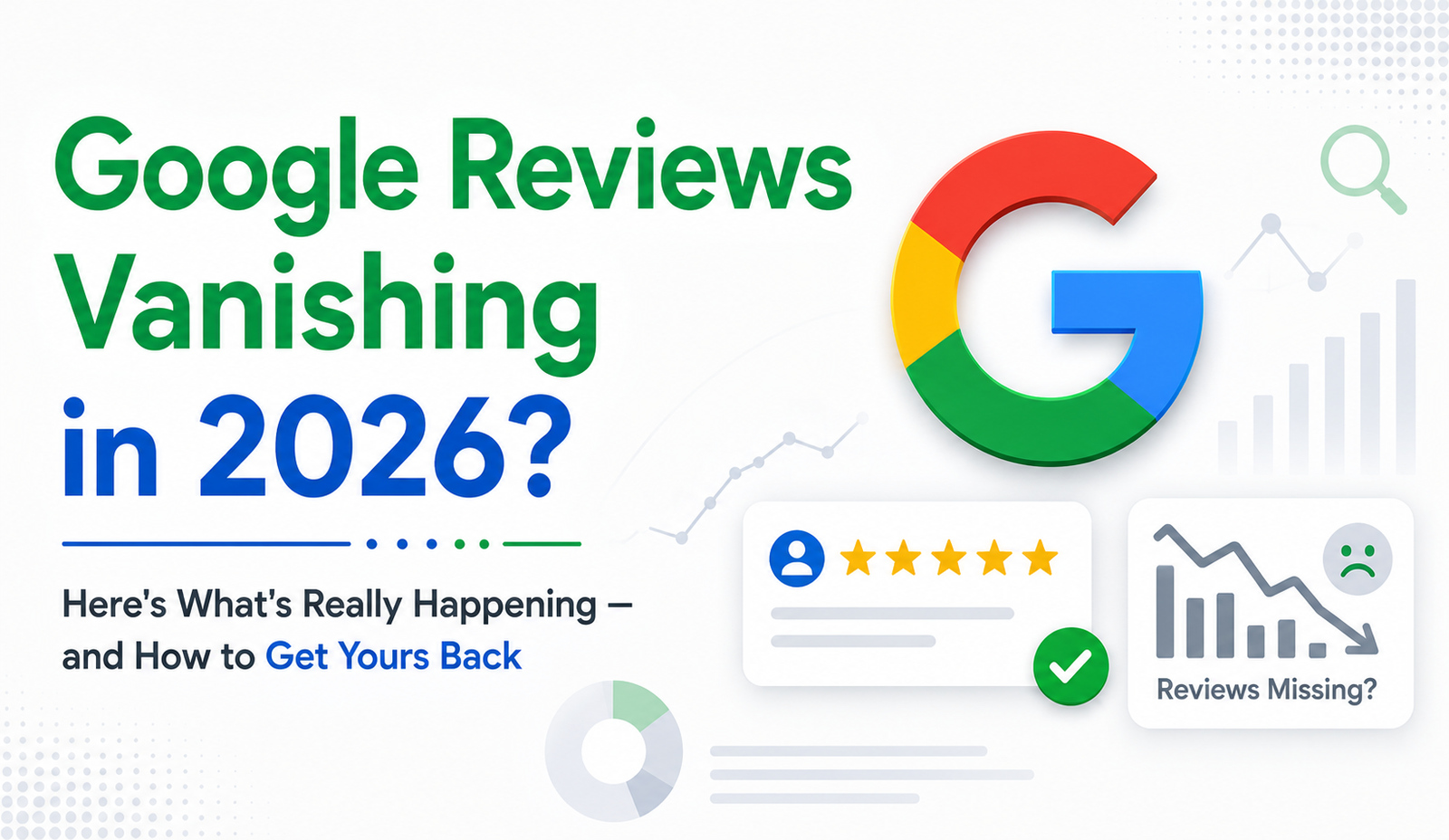
Logged into your Google Business Profile recently and the review count didn’t match what it should? You’re not imagining it, and you’re not alone. This has played out in waves since late 2025, and each time it resurfaces, business owners assume it’s brand new. It isn’t. It’s actually two separate problems tangled together: a technical bug and stricter enforcement and knowing which one hit you changes what you should do next.
This Didn't Start This Week
The first big wave hit in mid-October 2025, when review counts dropped overnight across many businesses. Google confirmed a display bug was to blame the reviews technically still existed, they just weren’t rendering publicly. That fix never fully held, and complaints kept surfacing into 2026.
February 2026 is when it escalated. Restaurants, clinics, retail shops owners across every industry saw counts quietly slip, sometimes by dozens, with no new reviews going live even though customers swore they’d left one. One review-management firm tracking client listings found that roughly 4.3 million reviews disappeared globally in mid-February 2026. About 3.8 million came back after verification. But 500,000 around 12% never returned. That’s not a minor glitch; it’s a lot of businesses permanently losing years of reputation, a frustration echoed across Google’s own support community.
Google Also Quietly Rewrote the Rules
While the bug drama played out, Google was also tightening its actual review policy with no announcement. In mid-April 2026, Google published its 2025 Trust and Safety Report, revealing it had blocked or removed over 292 million policy-violating reviews in 2025 alone. Days later, it added clauses to its Maps Rating Manipulation policy banning review quotas for staff and requests asking customers to name a specific employee. A local SEO expert simply noticed the change and flagged it before Google acknowledged it.
Two different mechanisms, one identical symptom: a backend sync bug hiding reviews Google still has on file (usually resolves on its own), or deliberate enforcement pulling reviews it judges manipulated, even years-old ones. From your side of the screen, both look the same. Only one reverses itself.
Why "Fake Review Attack, Then Everything Vanished" Keeps Coming Up
Many business owners describe the same sequence: a flood of spam reviews hits their profile, they report it, and shortly after, their entire review history disappears, sometimes with the rating reset to zero. Amy Toman, a Google Diamond Product Expert, flagged exactly this pattern, noting Google confirmed it’s aware and working on it.
This happens because Google’s abuse-detection system can pause the entire review pipeline for a flagged profile as a containment step but it doesn’t reliably separate incoming fakes from years of legitimate reviews already sitting there. That’s how a business can go from thousands of real reviews to double digits within 24 hours.
How to Recover Missing Google Reviews: Step by Step
Step 1: Confirm what you’re dealing with. Search your listing on Google Maps. If it’s suspended, that needs verification reinstatement, not a review appeal. If it’s live but reviews are gone, wait 48–72 hours sync bugs often self-correct.
Step 2: Check if you’re part of a bigger wave. Search the Google Business Profile Help Community for others reporting the same symptoms in the same window. You can also check Google’s own guidance on missing or delayed reviews for the latest official explanations.
Step 3: File a real support case. Use the Contact Us form, not just a forum post. State that multiple reviews vanished simultaneously, note approximate original dates, and confirm you haven’t used incentivized reviews, gating, or staff-name campaigns. Expect a form-letter reply first respond the same day, confirm compliance, and restate the timing and scale.
Step 4: Ask for specific reviews back. Don’t just ask Google to “restore my count.” Reference screenshots, reviewer names, dates, and ratings where you have them targeted requests get more traction.
Step 5: Audit your own review habits. Review quotas, staff-name requests, gating, on-site kiosks, and incentivized reviews are now explicit violations that can trigger removal and a profile that looks unnaturally clean can get flagged even when every review was real.
Step 6: Build a steadier collection process. Spread requests over time by email or SMS, send to your whole customer list, never trade anything for a review, and monitor your count so you catch drops within hours, not weeks.
Frequently Asked Questions
Will my reviews come back on their own? Often, yes if the drop matches a known sync or display bug, reviews tend to reappear within days to a few weeks. Reviews caught up in policy enforcement are much less likely to return without a support request.
How long does Google usually take to sort this out? There’s no fixed timeline. Past waves since October 2025 have taken anywhere from a few weeks to several months for partial resolution, and Google hasn’t committed to a fix date for the current wave.
Why did my count drop to zero right after I reported fake reviews? Reporting spam can trigger Google’s abuse-detection system to pause your entire review pipeline as a containment step which sometimes hides your legitimate reviews along with the fake ones until things get manually cleared.
Can I get one specific review reinstated? Yes, if you can identify it reviewer name, approximate date, star rating and submit a request through your dashboard rather than asking for a blanket restoration.
Does replying to reviews with AI put my profile at risk? No. Google has confirmed AI-generated replies are fine as long as you’ve authorized them. The current enforcement wave targets manipulated reviews and prohibited collection tactics — not AI-assisted responses.
Final Thoughts
Google has confirmed it’s aware of the missing-reviews issue, and a real share of what’s gone will likely return once the backend problem clears. But full recovery isn’t guaranteed, especially for older reviews or ones caught by tightened policy enforcement. A clear, well-documented support case gives you the best shot at getting yours back and tightening how you collect reviews going forward is your best protection against the next wave.
Review platforms change their rules quietly and often, and this is exactly the kind of shift that catches businesses off guard if no one’s watching for it. Keeping track of these changes, and knowing how to respond when your reviews take a hit, is what protects the reputation you’ve spent years building. That’s the kind of support MedowaGlobal offers helping businesses stay ahead of platform changes like this and manage their online reputation with a steady hand.