For years, search visibility followed a simple assumption. If a page performed well in Google Ads or ranked organically, it was treated as strong content. That assumption still shapes how most teams approach search, even though the systems behind it have changed significantly.
Disclosures from the U.S. Department of Justice antitrust case against Google made one thing clear: AI now drives almost every stage of ad ranking. At the same time, systems like Google AI Overviews and ChatGPT have shifted how information is surfaced. Instead of listing results, they generate answers and decide which sources are worth using.
Both environments rely on AI. They do not reward the same things. That difference explains why a page can perform well in ads and still fail to appear in AI-generated responses.
How Google Ads Uses AI to Rank Ads
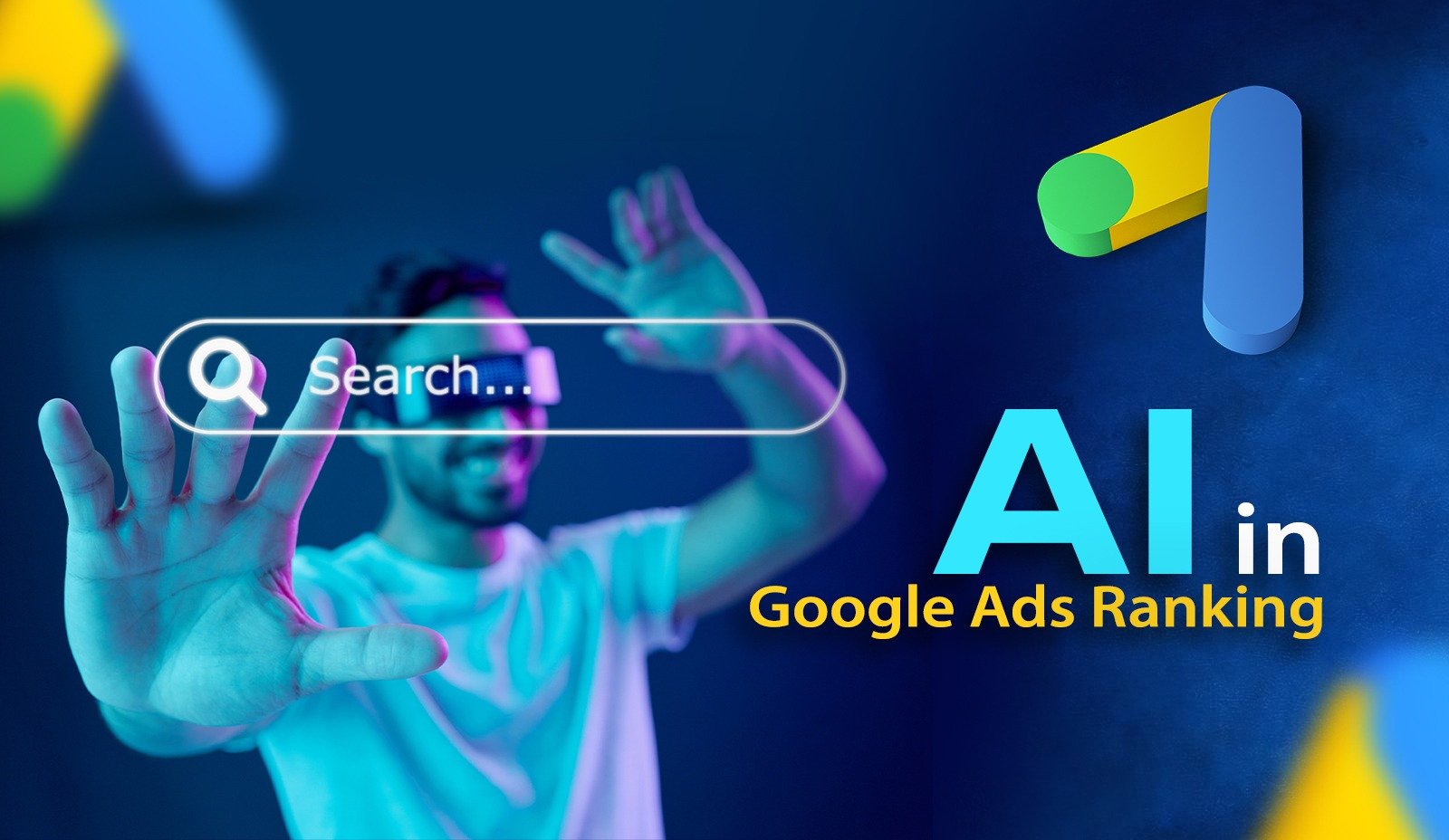
Google Ads no longer functions as a simple bidding system. It operates as a layered machine learning pipeline built on two core systems that handle different parts of the decision-making process.
Large Language Models sit at the front. They interpret the query, understand intent, and retrieve relevant ads using natural language understanding. This step focuses on context rather than exact keyword matching, which allows the system to align ads more closely with what the user is actually looking for.
Once relevant ads are retrieved, Learning-to-Earn Models take over. These systems focus on prediction at scale. They estimate click-through rates, conversion rates, and conversion value, and they also control automated bidding. As a result, advertisers are no longer competing purely on bids. They are competing on expected outcomes.
The system then moves through a structured pipeline that includes filtering out low-quality ads, dynamically composing creatives, applying bidding logic, and running the final auction. The creative composition layer is especially important here because AI does not just rank ads. It can reshape them based on context, particularly in verticals like shopping and travel, where formats adapt to user intent.
The final ranking is determined by a composite metric known as Lifetime Value. This combines revenue potential, user impact, and advertiser return into a single decision framework. In practice, this means Google ranks ads based on how valuable they are expected to be over time, not how informative or complete they are.
What AI Optimization in Google Ads Actually Improves
AI has made Google Ads faster and more efficient, but most of what’s improving isn’t about “better content.” It’s about better prediction.
A big chunk of the system now runs on learning-to-earn models. These models drive roughly 85 to 90 per cent of long-term revenue gains per thousand impressions. In plain terms, Google is getting really good at guessing what people will click on and what will make money over time.
There’s also a lot happening in the background to keep the system clean. It catches spam and suspicious clicks by spotting odd behavior patterns. It also tries to avoid showing ads that create a bad experience. Another important signal is whether people actually stick around after clicking an ad. Google often calls this a “Goodclick” when the visit feels useful, not just a quick bounce.
Privacy Matters
On the privacy side, Google leans on anonymized behavioral signals to understand intent without knowing who you are. These systems, sometimes referred to in frameworks like X-MEN, help improve targeting and bidding without exposing personal identity.
Put all of this together, and the direction becomes pretty clear. The system is getting extremely good at predicting what will perform. It is still not the same as understanding what is genuinely helpful or meaningful.
Why High-Performing Ads Do Not Appear in AI Recommendations
The gap becomes obvious when you look at what each system actually cares about.
Google Ads is built to drive results. It displays ads that are likely to drive people to click on them or buy something. The ad does not have to fully answer the question. It just needs to catch interest and move the user forward.
AI systems like Google AI Overviews work with a different filter. They look for content they can actually use to form an answer. So they like pages that explain things in full and clear detail, not just quickly or convincingly.
That is why some high-performing landing pages never show up in AI answers. They are great at selling, but they are not always written to explain something from start to finish. AI leans toward clarity, not persuasion.
The Gap Between Paid Visibility and AI Selection
Paid search and AI recommendations don’t really play the same game.
In paid search, you’re in a shared space. Multiple advertisers can show up for the same query, and your visibility depends on how you compete in that moment.
AI systems are more selective. They don’t show a list of options. They pick a few sources and build one answer. That means most content never even gets a chance to appear.
So even if a campaign is performing well in search ads, that doesn’t guarantee it shows up in AI results. The bar is different there. Content has to feel genuinely useful, clear, and worth pulling into the answer.
What Content Data Reveals About Long-Term Visibility
Across large studies, more than 80% of top-ranking pages are still written by people. Fully AI-generated pages make up only around 10%. AI is definitely involved in a lot of content now, but pages that are entirely AI-written rarely stay at the top for long.
The trend becomes clearer over time. Roughly 71% of AI-generated pages get indexed within the first 36 days and can pick up early impressions. But that early traction doesn’t always last.
The real gap shows up later. It’s not about whether the page fits the query on day one. It’s about whether it keeps proving its value. A lot of AI-heavy pages look complete at first glance, but they don’t really stand out. And when that happens, search engines tend to push them down in favor of pages that keep earning trust over time.
How Quality Signals Are Evolving with AI
Google has changed how it thinks about “quality” in ads.
The old Quality Score still exists, but you won’t see it working as a simple, standalone number anymore. It now runs inside Google’s AI systems in the background.
Instead of just matching keywords, the system tries to understand relevance. It looks at how people are likely to engage, using signals like click-through rate. It also judges landing page experience through behavior-based signals such as Goodclick. Experts like Jyll Saskin Gales have pointed out that ad quality and user experience matter more than ever, even if you can’t directly see those signals the way you used to.
Content Structure
The bigger change is this: quality isn’t something Google checks after the fact anymore. It’s something the system predicts upfront.
AI recommendation systems take this even further. They lean heavily on content that is clear, structured, and actually useful, because that’s what helps them generate reliable answers in the first place.
Why Information Gain Determines AI Visibility
As content becomes easier to produce, a lot of pages end up sounding the same. You’ll see the same basic explanations, the same definitions, the same summaries repeated everywhere. That’s exactly why it’s getting harder to stand out.
What starts to matter more now is what you add on top of the obvious. Not just “what it is,” but how you explain it, how you structure it, or what real-world clarity you bring in. That extra layer is what people (and systems) notice. Without it, the content doesn’t really add anything new.
And yes, that kind of content can still rank, especially in less competitive topics. But it rarely becomes the preferred choice when AI systems or search models try to pick the most useful result. They tend to lean toward pages that feel more complete, more specific, or simply more helpful.
Optimization vs Proven Usefulness
The difference between ranking in Google Ads and getting picked up by AI comes down to something pretty simple: what each one considers “good enough.”
With Google Ads, AI is mostly trying to predict performance. If it thinks your ad will get clicks or conversions, it will push it out. So even average or mid-level content can still get a lot of visibility if the signals look promising.
AI search systems are more selective. They don’t just care if something might perform well. They look for answers that are clear, complete, and genuinely helpful. If the content feels thin or confusing, it usually doesn’t get recommended.
As AI plays a bigger role in search, this difference becomes more noticeable. Getting optimized helps you show up, but it doesn’t guarantee you’ll be chosen.
For most businesses, fixing this isn’t about quick tweaks here and there. It usually needs a more consistent approach, often with a partner who understands both paid ads and AI-driven search, and can make sure content, structure, and performance all actually work together instead of pulling in different directions.