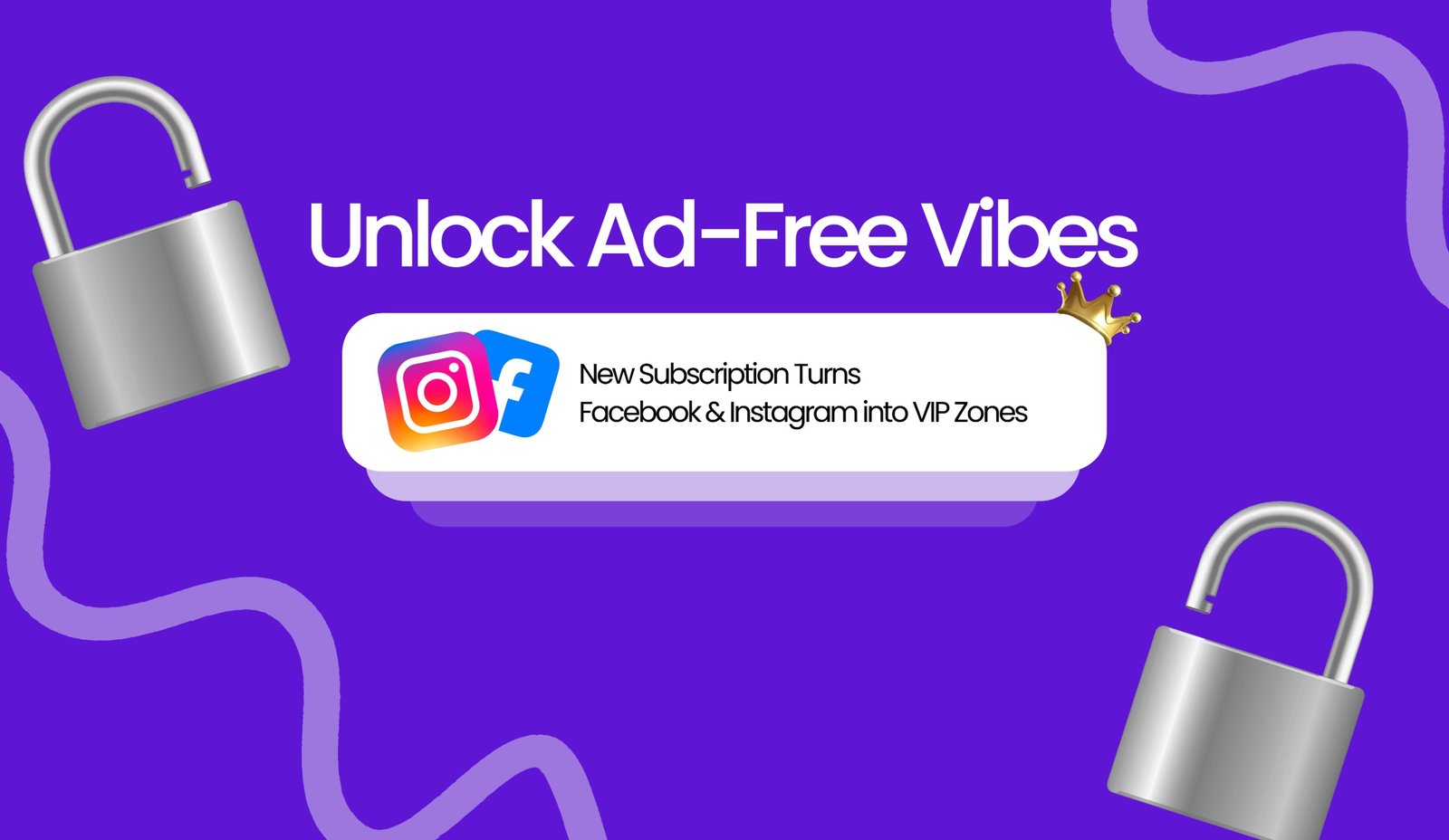
Meta—the parent company behind Facebook and Instagram—is rolling out a new paid, ad-free subscription option for users in the European Union (EU) and the United Kingdom (UK). Starting this month, individuals in these regions can opt for an ad-free experience on both platforms for just €2.99 per month (approximately ₹309.50). The social media giant reportedly said that the higher app price is due to the subscription fees charged by Apple and Google. This strategic move not only addresses compliance requirements under evolving EU and UK digital regulations but also gives users greater control over their online experience. By introducing this subscription tier, Meta aims to balance user privacy concerns with its business model—offering a cleaner, uninterrupted feed for those willing to pay while continuing to support its free, ad-supported version for others.
When this roll out and why?
The official rollout of this will be next week. possibly on Oct 10, 2025. Allowing the user to use an option in the monthly subscription fee to remove all the ads.
What meta said about the subscription; “This approach and outcome sets the UK apart from the EU, where we have been engaged in similar discussions with regulators. EU regulators continue to overreach by requiring us to provide a less personalised ad experience that goes beyond what the law requires, creating a worse experience for users and businesses. This moves Meta away from targeting users with ads as part of the standard terms and conditions for using its Facebook and Instagram services, which we’ve been clear is not in line with UK law.”
According to the report, this strategy will enable Meta to navigate Europe’s stringent online privacy regulations while maintaining its sales. Users over 18 will be notified about the subscription option, but can continue to use the services for free with ads. It’s worth noting that advertising accounted for 97% of Meta’s revenue in 2022.
After facing a $232 million fine in 2023, Meta adjusted its system to comply with EU rules. However, in July, the European Commission demanded further changes and warned that daily fines could follow if the revisions fell short.
Since leaving the European Union, the UK has had more leeway to adopt a lighter stance on online privacy and has now approved the rollout there. Meta said it has held extensive talks with the UK’s privacy regulator, the Information Commissioner’s Office.

Why is Meta suddenly adding a subscription ?
In response to recent regulatory guidance from the UK’s Information Commissioner’s Office (ICO), Meta is introducing a clear and user-friendly choice for people in the UK: they can either consent to personalized advertising or opt for a subscription to access Meta’s services ad-free. This change not only aligns with the ICO’s expectations but also preserves the ad-supported internet model that delivers free access and significant value to users, businesses, and platforms alike. Recognizing that subscriptions are a proven and economically sustainable alternative, widely adopted across industries such as news, gaming, music, and entertainment, Meta has worked closely with the ICO to set a subscription price that is among the lowest in the market, ensuring affordability while respecting user autonomy.
Further, this result underscores one of the main differences between the UK’s regulatory style and that of the EU. Whereas UK regulators have encouraged a growth-oriented, innovation-friendly ecosystem that enables users with real choice, EU regulators still maintain requirements over and above legal requirements, compelling platforms to provide a less targeted—and ultimately less effective—advertising experience. As a result, the UK model better supports both consumer preferences and business needs. In fact, Meta’s advertising technologies alone contributed £65 billion to UK economic activity. They supported over 357,000 jobs in 2024, demonstrating how a balanced regulatory framework can drive productivity, innovation, and financial impact across the country.
What happens if the user doesn’t use the subscriptions?
For users who opt to keep using our services at no cost, ads will remain a part of their experience on Facebook and Instagram, but they’ll still retain full access to the robust suite of tools and settings designed to give them control over how ads appear in their feeds. Specifically, they can use Ad Preferences, a feature that offers a range of customizable controls to shape the types of ads they see and manage the data that informs those ads, including Activity Information from Ad Partners. In addition, our platforms include transparent, user-friendly explanations, such as the “Why am I seeing this ad?” prompt, that clarify why a particular ad was shown and how to adjust ad settings accordingly. Importantly, we want to emphasize that we do not sell personal data to advertisers; instead, we use aggregated and anonymized information to deliver relevant ads while respecting user privacy.
What does this mean to people on UK?
Meta will begin notifying UK users aged 18 and older that they now have the option to subscribe to Facebook and Instagram for a fee, enabling them to enjoy both platforms without ads. Initially, this notification will be dismissible, giving existing users time to explore their choices before any action is required.
Once a user decides to subscribe, the ad-free experience will apply across all Facebook and Instagram accounts they’ve linked to their Meta Accounts Center—no matter where the subscription is purchased. This unified approach ensures a seamless, consistent experience across devices and platforms.
Although Meta’s social media services are typically personalized using user data to deliver relevant ads, subscribers will no longer have their personal information used for ad targeting. In other words, going ad-free also means opting out of personalized advertising entirely.
For users managing multiple accounts, a reduced additional fee will apply: £2 per month when subscribed via the web, or £3 per month on iOS and Android, for each extra account added to the Meta Accounts Center. This tiered pricing structure offers flexibility while maintaining transparency about costs across different platforms.