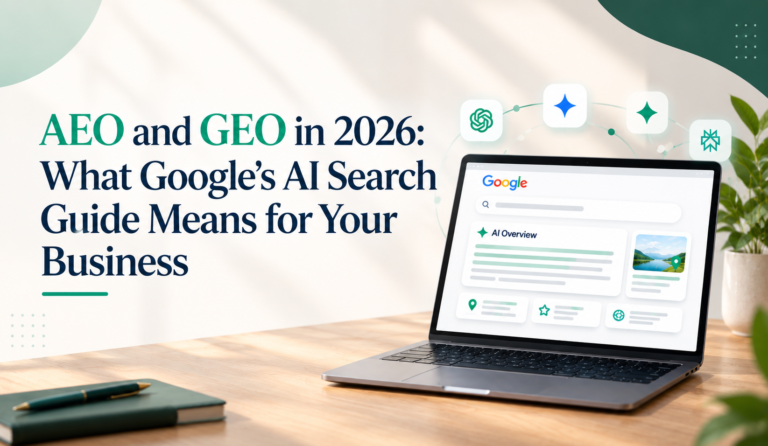
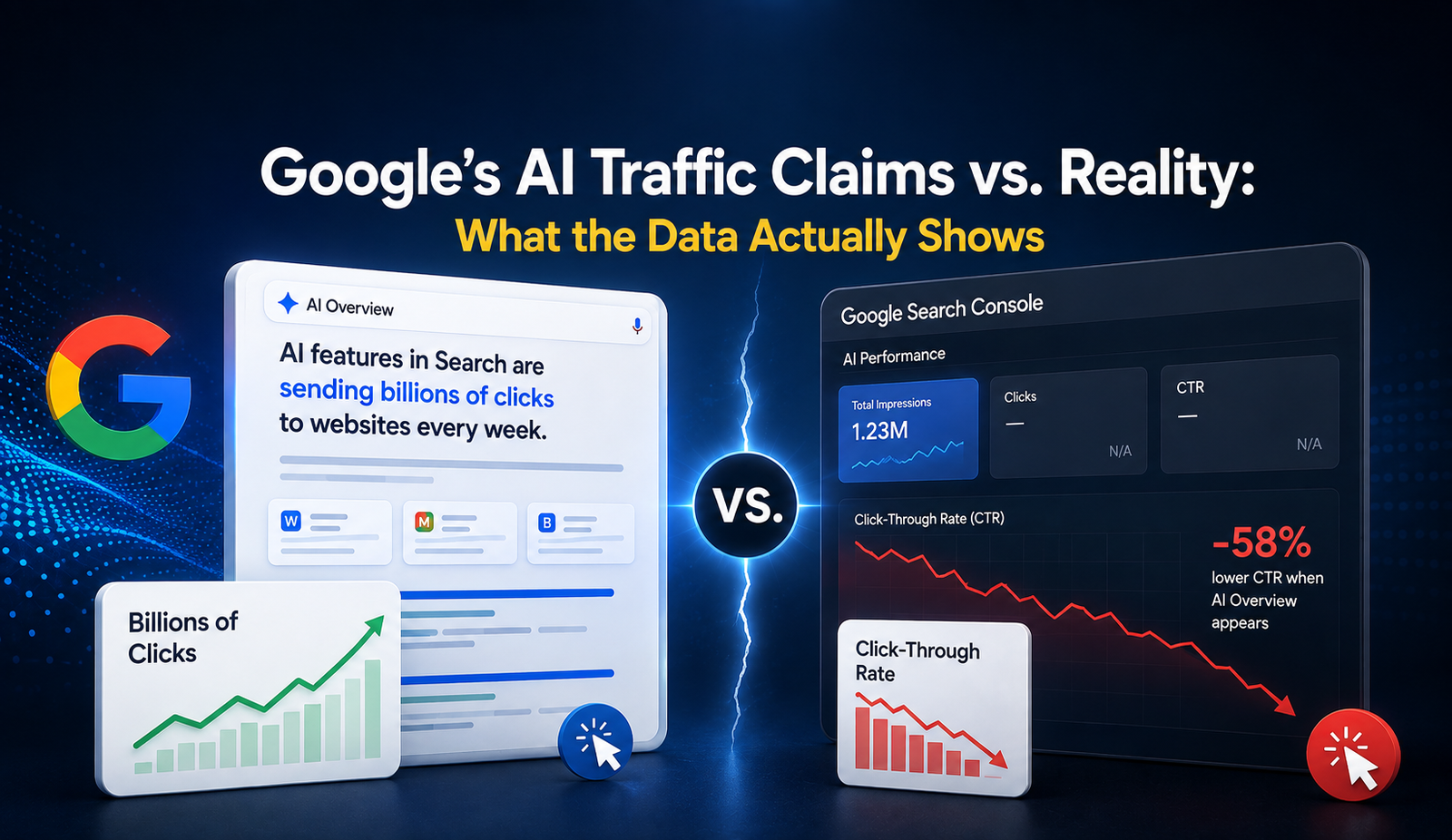
Google says AI features in Search are sending billions of clicks to websites every week. Independent researchers, using Google’s own Search Console data, keep finding the opposite: click-through rates falling sharply wherever an AI Overview appears. Both statements can be true at once, and understanding why matters a lot more than picking a side.
What Google Actually Said
On July 17, 2026, Nick Fox, Google’s Senior Vice President of Knowledge and Information, posted on LinkedIn that AI features in Search are “now sending billions of clicks to websites every week.” He framed the post as a direct response to two fears publishers had been raising: that AI answers would make search pointless, and that they’d kill click-throughs to websites entirely. On the first point, Fox argued the opposite happened, people search more, not less, when they can ask open-ended questions. On the second, he offered the billions-of-clicks figure as proof that referral traffic is still alive and well, adding that Google’s AI features were “designed to connect people to websites” and that Search overall “continues to send billions of clicks to the web every day.”
The timing wasn’t incidental. The post landed as Google was finishing its biggest redesign of Search in years, unveiled at Google I/O 2026, folding AI Overviews and AI Mode into a single Gemini-powered experience, and as independent publishers were filing a formal complaint with the European Commission over lost traffic they attribute to AI Overviews. A reassuring statistic from a senior Google executive, arriving at exactly that moment, read to much of the industry as messaging rather than a genuine data release.
The reaction from the SEO and publishing community was immediate, and largely skeptical.
Why the SEO Community Pushed Back
The core problem isn’t that Fox’s number is false. It’s that it’s unverifiable and, on its own, not very meaningful. A total measured in “billions” carries no denominator. Search Console’s own AI performance reports currently show impressions for a site’s pages inside AI features, but not clicks, so site owners have no way to check Google’s aggregate figure against their own numbers. It’s a bit like being told restaurant industry revenue grew this year while your own restaurant’s bookings keep dropping. The macro figure and your lived experience aren’t contradictory, they’re just measuring different things.
Meanwhile, independent research keeps arriving at a consistent, specific picture:
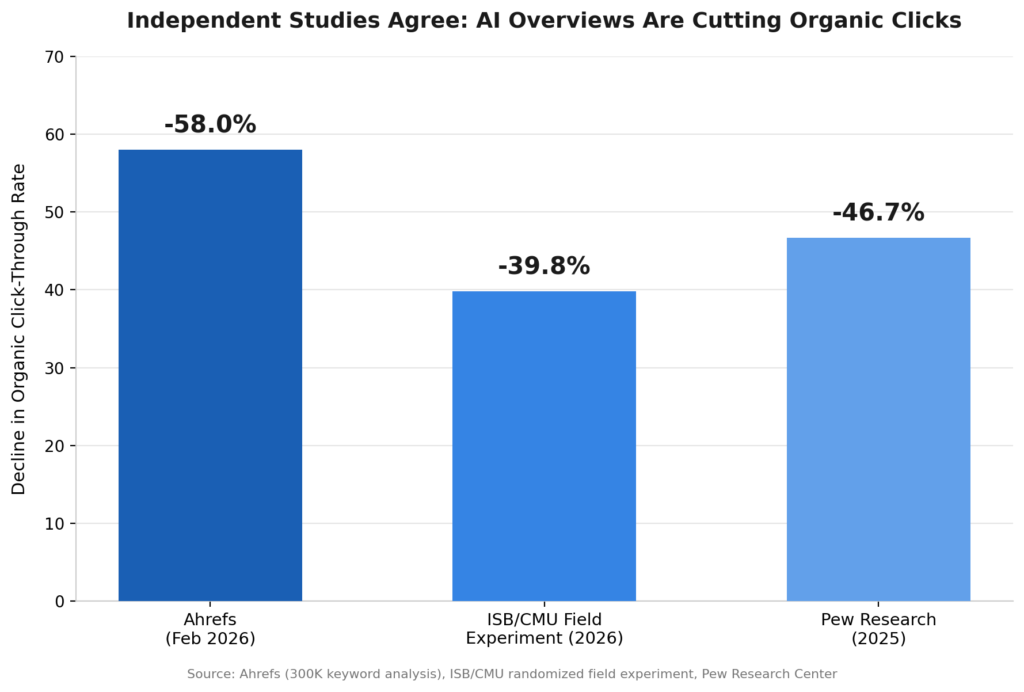
- Ahrefs (February 2026): analyzed 300,000 keywords using real Search Console data and found a 58% lower average click-through rate for pages ranking in position one when an AI Overview appeared above them
- A randomized field experiment (Indian School of Business and Carnegie Mellon University, revised June 2026): covering more than 1,000 Chrome users, found a 39.8% drop in outbound organic clicks when AI Overviews were present
- Pew Research Center: found users clicked a traditional search result just 8% of the time when an AI summary appeared, compared with 15% when it didn’t, and that 26% of browsing sessions ended entirely on pages with an AI summary versus 16% without one
This is a rare case where several independent methodologies, using different datasets and different research teams, all point in the same direction. That’s exactly the kind of corroboration that tends to hold up over time.
How Both Sides Can Be Right
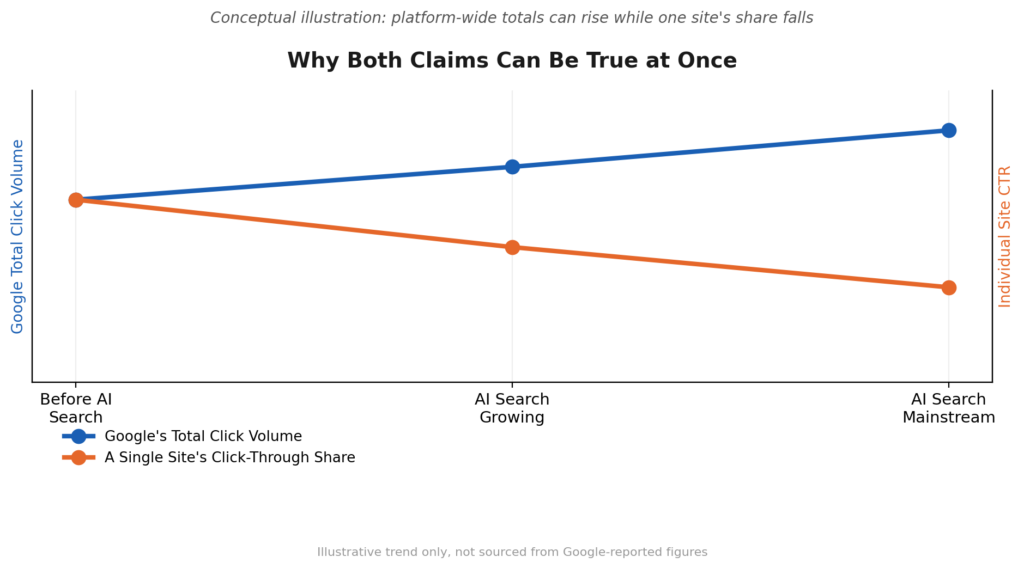
Fox’s claim and the independent data aren’t actually contradicting each other, they’re describing different layers of the same system. Google’s total search volume has grown, so even a shrinking share of a much bigger pie can still add up to a large absolute number of clicks. At the same time, for any individual website, what matters isn’t Google’s platform-wide total, it’s the click-through rate on the specific pages that used to send that site traffic. That rate is what independent researchers keep measuring, and it keeps falling.
Google has acknowledged it plans to add more click-level metrics to Search Console’s AI performance reports over time, though it hasn’t specified which metrics or when. It did expand its Preferred Sources feature into AI Overviews and AI Mode in May 2026, reporting doubled click-through rates for labeled links from over 345,000 selected sources, a useful data point, but one describing a narrow, opted-in subset rather than the broader picture most site owners want. Until fuller reporting arrives, site owners are left comparing a vague platform-wide claim against their own, more concrete, traffic dashboards.
What This Actually Means for Your Business
Whichever side of this debate turns out to be more accurate in the long run, the practical takeaway for most businesses is the same. Being the answer a search engine gives, rather than one more blue link a person has to click through to, is becoming a real, separate goal from ranking well in the traditional sense.
A few things worth focusing on given this shift:
- Structure content so it can be cited, not just ranked. Clear headings, direct answers early in a section, and well-organized facts make it easier for AI systems to pull and attribute your content inside an AI Overview or AI Mode response. This is the same discipline good search engine optimization has always rewarded, just extended to a new surface.
- Track impressions in Search Console’s AI performance reports, even without click data. A rising share of impressions coming from AI surfaces is a signal worth watching, even if the click picture stays incomplete for now.
- Don’t abandon traditional SEO fundamentals. Traditional search results and citations inside AI answers aren’t separate battles requiring separate content, the same well-structured, genuinely useful content tends to perform in both.
- Build first-party channels that don’t depend on referral clicks at all, email lists, direct customer relationships, community, so a shrinking click-through rate on any single channel matters less to the business overall.
Frequently Asked Questions
Is Google lying about sending billions of clicks? Not necessarily. The figure is likely accurate as a raw total, but it’s also broad enough to be compatible with individual sites seeing declining click-through rates. The two things aren’t mutually exclusive.
Why doesn’t Google share click data in Search Console’s AI reports? Google has said it plans to add more metrics over time but hasn’t given a timeline. Until then, site owners only see impression data for AI surfaces, not clicks.
Should I stop investing in SEO because of AI Overviews? No. Traditional SEO fundamentals, clear structure, genuine usefulness, credibility signals, still matter and also help your content get cited inside AI-generated answers.
How can I tell if AI Overviews are affecting my own traffic? Compare your overall click trends against your keyword rankings over time. If rankings are stable but clicks are declining, especially on pages likely to trigger an AI Overview, that’s a strong signal worth investigating further in your analytics.
Final Thought
This debate isn’t going to resolve cleanly anytime soon, and it probably shouldn’t. Google has real incentive to frame AI Search as traffic-positive, and publishers have real incentive to highlight the decline they’re seeing in their own analytics. Both pressures are legitimate, and both are shaping how this plays out. What businesses can actually control is how well their content is built for a search experience that increasingly includes both a traditional results page and an AI-generated answer sitting above it. That’s worth investing in regardless of who turns out to be more right about the billions.
Keeping track of shifts like this is part of how Medowa Global helps businesses adjust their SEO and content strategy as search itself keeps changing.