
10 eCommerce SEO Strategies That Drive More Traffic and Sales in 2026

ecommerce seo strategies

Running an online store in 2026 is no longer just about uploading products and hoping customers find their way to you. With so many e-commerce sites out there, standing out has become the key to steady growth rather than stagnant sales. This is where e-commerce SEO comes in.

But here’s the thing: e-commerce SEO isn’t the same as optimizing a regular website. Instead of just a few pages, you’re dealing with hundreds or even thousands of product pages, category pages, and filters. Each of these pages can help you attract search traffic, but only if they’re set up and optimized properly.

The brands that do well with SEO don’t just tweak a few things here and there. They approach it as a complete system, making sure everything works together: site structure, content, performance, and user experience.

So, here are ten e-commerce SEO strategies that can help you bring in more traffic and, of course, more sales.

1. Build a Site Structure That Supports Discovery

Your site structure is the backbone of your SEO. If visitors have trouble finding their way around your store, search engines will struggle too.

A strong ecommerce structure keeps navigation simple and predictable. Ideally, customers should be able to reach any product in three or four clicks. Organize categories the way your customers search for products, not just how your business is set up internally.

For example, a store selling outdoor gear might guide users from Camping Equipment to Tents to 4-Season Tents and then to the product pages. This clear path makes the site easier to use and helps search engines find and index your pages.

Internal linking makes the structure even stronger. Linking related products, categories, and subcategories spreads authority across your site and ensures no important page is left out.

2. Focus on Keywords That Indicate Purchase Intent

Driving traffic is not enough if that traffic does not convert. In e-commerce SEO, understanding keyword intent is essential.

Keywords typically fall into three categories, each representing a different stage in the buyer journey:
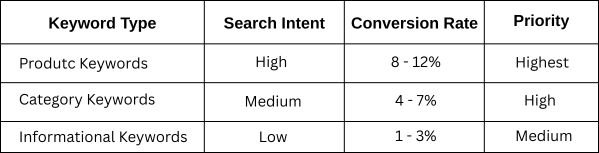
Keyword Type

Product keywords usually indicate strong purchase intent, as users already know what they want. Category keywords attract users who are comparing options, while informational queries capture early-stage research.

A well-balanced strategy targets all three but prioritizes product and category keywords, since they contribute directly to revenue.

3. Capture High-Intent Traffic With Long-Tail Keywords

Long-tail keywords are a big deal for e-commerce SEO because they show exactly what people are looking for. Unlike broad search terms, these specific queries often reveal a shopper’s real intent.

For example, someone searching for waterproof hiking boots, women’s size 8 wide, is probably ready to buy. That kind of search tells you exactly what they want and that they are close to making a purchase.

You can make the most of this by setting up product filters around things like size, color, brand, and features. When done well, these filters not only make it easier for customers to find what they want but also help your site appear in searches for very specific queries.

4. Optimize Product Pages for Visibility and Conversions

Product pages are the heart of e-commerce SEO and often determine how well your site performs.

A big mistake many stores make is using the manufacturer’s descriptions. These are usually the same as everyone else’s and can hurt your rankings. Writing your own unique descriptions gives your pages a much better chance to stand out.

Good product pages do more than just list features. They explain why a product is useful, how it helps, and answer the questions customers are likely to have. Even a short, original description can beat generic content.

Adding quality images, customer reviews, and clear information about pricing and availability makes your pages even stronger. This not only helps search engines understand your products but also makes shoppers more likely to click and buy.

5. Turn Category Pages Into Traffic Drivers

Category pages are great at ranking for broad, high-traffic keywords, which makes them a key part of your SEO strategy.

Too often, though, e-commerce sites treat these pages as just lists of products. To get better results, you need to add content that actually helps people understand what they are looking at.

For example, a category page for Organic Baby Food could explain the ingredients, the nutritional benefits, and how to choose the right product. This not only helps your page rank higher but also makes it easier for customers to make informed choices.

6. Strengthen Technical SEO to Improve Performance

Technical SEO is about making sure search engines can easily find, read, and rank your pages. Even the best content can get overlooked if this isn’t in place.

Site speed matters a lot for both rankings and keeping visitors around. Pages that load slowly frustrate people and make them leave. You can make your site faster by optimizing images, cutting out unnecessary scripts, and turning on caching.

Core Web Vitals are important too. Your pages should load quickly, respond smoothly when people click or scroll, and stay visually stable so nothing jumps around while browsing.

7. Deliver a Seamless Mobile Experience

Most ecommerce traffic now comes from mobile, so making sure your site works well on phones is a must.

Your site should be easy to navigate on small screens, load quickly, and let customers check out without any hassle. Since search engines look at your mobile site first, a smooth mobile experience can have a big impact on your rankings.

8. Use Content Marketing to Build Authority and Earn Links

Content marketing lets you reach people before they even see your product or category pages.

Writing articles like buying guides, product comparisons, and how-to tutorials helps attract users who are still figuring out what they need. Over time, this kind of content builds trust and shows that your brand knows its stuff.

It also helps you earn backlinks through things like digital PR, partnerships, and mentions in your industry. These links make your site stronger and improve rankings across all your pages.

9. Manage Duplicate Content With Clear SEO Signals

Duplicate content is a natural challenge in e-commerce due to product variations, filtering systems, and pagination.

If not managed properly, these duplicates can dilute your ranking potential. The solution lies in providing clear signals to search engines.
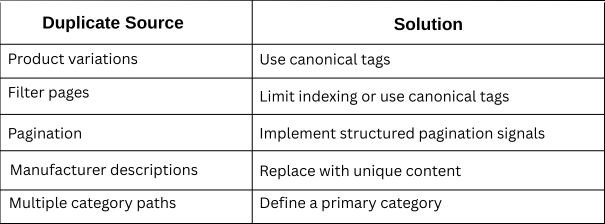
Content With Clear SEO Signals

By consolidating similar pages under a primary version, you ensure that authority is not split across multiple URLs.

10. Improve User Experience to Boost Engagement and Sales

User experience now has a real impact on SEO. Search engines notice how people use your site, including how long they stay and how many pages they visit.

Making your site easier to navigate, adding clear product details, showing customer reviews, and simplifying checkout can make a big difference. These changes help your visitors and also boost conversions while sending positive signals to search engines.

Measure Performance and Refine Your Strategy

Keeping track of your performance is key to long-term success in ecommerce SEO. Without the right data, it is hard to tell what is working and where you need to make changes.

Focus on metrics like organic traffic, keyword rankings, conversion rates, and the revenue coming from search. Tools like analytics platforms and search consoles make it easier to spot patterns and adjust your strategy over time.

Learn From Competitors and Plan for Seasonality

Keeping an eye on your competitors can give you a lot of useful insights. By looking at their best-performing pages, the keywords they use, and where their backlinks come from, you can find opportunities to improve your own strategy.

Seasonal trends are another big factor in e-commerce. If you plan your content and SEO ahead of time, you can be ready when search demand peaks and get a head start on competitors who wait until the last minute.

What Defines E-commerce SEO in 2026

People’s search habits are changing fast with AI-driven results, voice search, and visual discovery. That means e-commerce SEO isn’t just about getting your pages to show up on Google anymore.

Now it’s about building trust, authority, and visibility across different platforms. Brands that adapt to this bigger picture are in a much better position to meet today’s customers and be ready for what comes next.

Conclusion

E-commerce SEO in 2026 works best when your approach is clear and matches the way people actually search and shop online. A well-organized site, pages that are properly optimized, a strong technical setup, and a focus on the user experience all help your store get noticed and sell more.

For many businesses, getting consistent results is much easier with a reliable digital partner who understands both e-commerce platforms and how people search today. That kind of know-how can be the difference between slow, uncertain growth and steady success over the long term.

Tags
What do you think?
Leave a Reply

Your email address will not be published. Required fields are marked *

What to read next